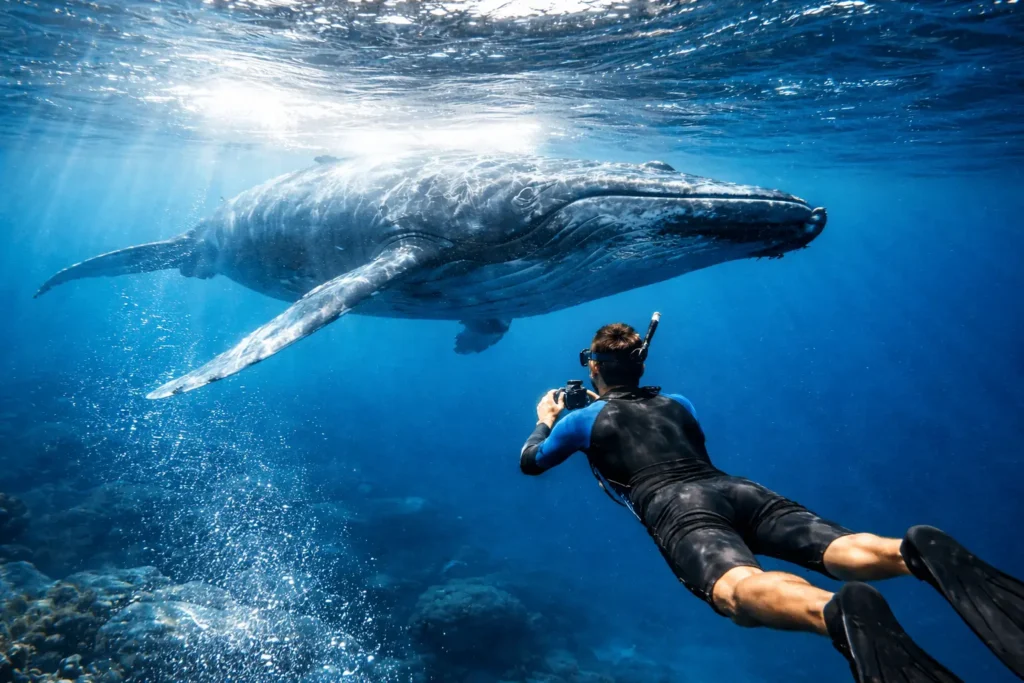
- 1. Monterey Bay, California, USA
- 2. San Ignacio Lagoon, Baja California Sur, Mexico
- 3. Tadoussac, Quebec, Canada
- 4. Kaikoura, New Zealand
- 5. Hermanus, South Africa
- 6. Husavik, Iceland
- Essential Gear for the Whale Watcher
- A Note on Ethics
- The “Morning Sickness” Reality Check
- Why We Do It
- Where is your next heading?
You never forget your first spout.
For me, it was a gray, drizzle-soaked Tuesday off the coast of Vancouver Island. My coffee had gone cold, my hands were numb, and I was questioning why I left the warm comfort of my camper for a rocking boat. Then, the water exploded. A Humpback breached forty tons of defied gravity crashing down with a sound that rattled my chest.
That moment changed everything. It wasn’t just “sightseeing.” It was a primal connection to something ancient.
If you are reading this, you aren’t looking for a sterile “top 10” list generated by a robot. You want the salt spray, the diesel fumes of the ferry, and the specific GPS coordinates where you can park your rig, brew a fresh pot, and watch giants migrate while you sit in your camp chair.
We value freedom here. We value the road. So, let’s talk about where to point your headlights this year. Check this out: here is the absolute best places to watch whales, specially reserved for those of us who journey with our wheeled theatres.
1. Monterey Bay, California, USA
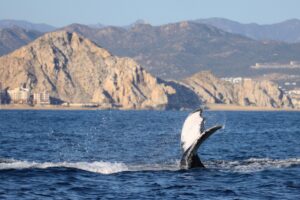 A landscape shot of a beautiful whale tail in a blue body of water with a mountain city in the background.
The Vibe: Big Sur’s rugged cousin.
The Target: Humpbacks, Blue Whales, Orcas.
Monterey Bay isn’t just a bay; it’s a deep submarine canyon that comes right up to the shore. Think of it as an underwater Grand Canyon that funnels nutrient-rich cold water to the surface. This creates a feeding frenzy that is unmatched almost anywhere else on the Pacific Coast.
The Whales
You can see whales here year-round, which is rare.
- Humpbacks: The acrobats. They are here from March through November. They are the ones you see breaching (jumping out of the water) and slapping their tails.
- Blue Whales: The big ones. The largest animals to ever live. They show up in late summer, usually July to October. Seeing one is like watching a building float by.
- Orcas (Killer Whales): The wolves of the sea. They hunt in the bay, particularly in April and May when they target gray whale calves (it’s brutal, but it’s nature).
The RV Angle
California isn’t always friendly to big rigs, but Monterey works if you plan ahead.
- Where to Camp: The Marina Dunes RV Park is a solid bet. It puts you just north of the action with easy access to Highway 1. If you want something more rugged, look at Moss Landing KOA Express. It is right near the harbor where many tours depart.
- Parking the Rig: Do not try to park a 30-footer in downtown Monterey near Fisherman’s Wharf. It is a nightmare. Park at your campsite and take a rideshare or tow vehicle into town.
Insider Tip
If you suffer from motion sickness, this bay can get choppy. However, because the canyon is so close to shore, you don’t always need a boat. Drive south on Highway 1 to Garrapata State Park. Pull over (safely) at the turnouts. I’ve sat on the roof of my truck there and watched Humpbacks breach less than a mile offshore. No boat ticket required.
2. San Ignacio Lagoon, Baja California Sur, Mexico
The Vibe: Remote desert magic.
The Target: Gray Whales (The “Friendlies”).
This is the holy grail for RVers. The drive down the Baja peninsula is a rite of passage. San Ignacio Lagoon is one of the few places left on Earth where wild animals actively seek out human contact. We call them the “friendlies.”
The Whales
- Gray Whales: They migrate thousands of miles from Alaska to these warm, shallow lagoons to give birth.
- The Season: January to April. Mid-February is usually the peak.
The Experience
You take a small panga (fishing boat) out into the lagoon. The mothers will often push their calves right up to the boat. I have scratched the nose of a wild 40-foot whale here. They look you right in the eye. It is an emotional, spiritual experience that leaves grown men weeping in the bottom of the boat.
The RV Angle
This is boondocking country.
- The Drive: You will be driving Highway 1 down Baja. It is narrow and lacks shoulders, so drive only during the day.
- Where to Camp: There are several “camps” around the lagoon. Rice and Beans in the town of San Ignacio is a classic RVer stopover with full hookups and stiff margaritas. From there, it’s a dusty washboard road out to the lagoon. You can camp right on the lagoon edge at places like Ecoturismo Kuyima, but be prepared for wind and zero hookups.
Insider Tip
Bring gifts for the local kids in the fishing villages—stickers, coloring books, or baseballs. The community here protects the whales fiercely. Also, protect your rig’s undercarriage; the salt air and lagoon mud are corrosive. Wash your truck thoroughly when you get back to the paved road.
3. Tadoussac, Quebec, Canada
The Vibe: French charm meets Arctic chill.
The Target: Belugas, Minke, Fin, and Blue Whales.
Tadoussac sits at the confluence of the Saguenay Fjord and the St. Lawrence River. The mixing of fresh river water and salt ocean water creates a krill explosion. It is one of the best places in the world to see whales from land.
The Whales
- Belugas: These white “sea canaries” are residents here year-round. They are small, chatty, and incredibly distinct against the dark water.
- Minke Whales: Fast and frequent.
- Blue Whales: They enter the estuary in late summer/early fall.
- The Season: May to October. September is visually stunning with the fall foliage on the fjord walls.
The RV Angle
Quebec is incredibly RV friendly but the hills are steep.
- Where to Camp: Camping Tadoussac is legendary. It sits on a hillside overlooking the bay. You can literally watch whales from your campfire if you book a site with a view.
- The Ferry: To get to Tadoussac from the south, you have to take a ferry across the Saguenay. It’s free and runs 24/7. It fits big rigs easily (I’ve taken a 35-foot fifth wheel across), but it can be intimidating the first time. Just follow the attendant’s hand signals.
Insider Tip
Walk the Pointe-de-Islet trail. It is a short, wooden boardwalk hike right from the marina. The rocks jut out into the water, and the whales come shockingly close to the drop-off. You can hear them breathe before you see them. Bring a warm jacket, even in July. The wind off the St. Lawrence cuts deep.
4. Kaikoura, New Zealand
The Vibe: Mountains crashing into the sea.
The Target: Sperm Whales.
If you are renting a campervan in New Zealand (a bucket list trip for any of us), Kaikoura is non-negotiable. The geography here is similar to Monterey but even more dramatic. The continental shelf drops away just hundreds of meters from the beach.
The Whales
- Sperm Whales: This is the star of the show. They dive deep to hunt giant squid. You see them logging on the surface to re-oxygenate, and then they flick those massive flukes up and dive.
- The Season: Year-round.
The RV Angle
New Zealand was built for campervans.
- Where to Camp: The Kaikoura TOP 10 Holiday Park is excellent. It’s clean, has great facilities, and is walking distance to town.
- Freedom Camping: New Zealand allows “freedom camping” (boondocking) in certified self-contained vehicles, but Kaikoura has strict restrictions due to popularity. Check the local council maps. Do not just park anywhere; the fines are steep.
Insider Tip
If the boats are cancelled due to swell (which happens often), book a flight. Wings Over Whales operates light aircraft tours. Seeing a Sperm Whale from above gives you a sense of scale you cannot get from a boat. You can see the entire silhouette of the animal underwater. It is worth every penny.
5. Hermanus, South Africa
The Vibe: The world capital of land-based viewing.
The Target: Southern Right Whales.
You don’t need a boat here. Hermanus has a cliff path that runs along the coast, and the whales come into the coves just yards from the rocks to calve.
The Whales
- Southern Right Whales: They are massive, slow, and lack a dorsal fin. They are called “Right” whales because back in the dark whaling days, they were the “right” ones to hunt (slow, floated when dead). Now, they are the right ones to watch.
- The Season: June to November. The peak is late September during the Whale Festival.
The RV Angle
South Africa has a robust caravanning culture.
- Where to Camp: Look for Onrus Caravan Park. It is right on the ocean, just a short drive from the center of Hermanus. It’s safe, scenic, and packed with locals braai-ing (barbecuing) on the weekends.
Insider Tip
Listen for the Whale Crier. This is a real job in Hermanus. A person walks the streets with a kelp horn, blowing coded signals to tell you where the whales are. It sounds touristy, but it’s actually incredibly helpful. If you hear the horn, grab your binoculars and run to the cliffs.
6. Husavik, Iceland
The Vibe: Nordic noir meets wildlife documentary.
The Target: Humpbacks and Blue Whales.
If you are renting a camper in Iceland to do the Ring Road, make the detour north to Husavik. It is a charming fishing village that lives and breathes whales.
The Whales
- Humpbacks: nearly guaranteed in the summer.
- Blue Whales: Skjálfandi Bay is one of the most reliable places in Europe to see them.
- The Season: May to September. June and July offer the Midnight Sun, meaning you can whale watch at 11 PM in broad daylight.
The RV Angle
- Where to Camp: Husavik Campground is located just above the town. You can walk to the harbor. It’s a simple grass field with clean facilities, but the view over the bay is unmatched.
- The Rig: Icelandic winds are no joke. If you are in a high-profile camper, park nose-into the wind. I have seen doors ripped off hinges here.
Insider Tip
After your tour, visit the GeoSea Geothermal Sea Baths. You can sit in hot, geothermal seawater on a cliff edge, drinking a beer, and watching for whale spouts in the bay below. It beats the Blue Lagoon any day of the week.
Essential Gear for the Whale Watcher
You don’t need a lot, but you need the right stuff.
-
The Binoculars
Do not buy the highest magnification. It’s a rookie mistake. On a moving boat, 12x or 15x magnification just means a shaky image that will make you vomit.
- Get this: 8×42. The “8” is the magnification (steady enough for a boat), and the “42” is the lens width (lets in plenty of light for gray days).
- Brand: Vortex or Nikon make great mid-range glass. You don’t need Swarovski unless you have money to burn.
-
The Camera Lens
Your smartphone will disappoint you. The whale will look like a speck of pepper on a blue plate.
- If you have a DSLR, you need at least 300mm.
- Shoot in “Sports Mode” or high shutter speed (1/1000 or faster). The boat is moving, the whale is moving, and your hands are shaking. Speed is your friend.
-
The Layers
It is always colder on the water than on land. Always.
- Base: Merino wool (no cotton).
- Mid: Fleece or puffy jacket.
- Shell: A high-quality rain jacket. It breaks the wind and keeps the spray off.
- Pants: Do not wear jeans. Wet denim is miserable. Wear hiking pants or rain pants.
A Note on Ethics
We have a duty as travelers who appreciate the wild. We are staying at their house.
- Choose the Right Operator: Look for the “Whale SENSE” or “World Cetacean Alliance” These boats adhere to strict guidelines. They don’t chase whales; they parallel them. They cut engines when close.
- Give Them Space: If you are in your own kayak or dinghy, the rule is generally 100 yards (check local laws). If a whale approaches you, stop paddling and enjoy the moment. Do not pursue.
- Plastic: It sounds preachy, but it matters. I’ve seen whales entangled in fishing gear and trash. Reduce your single-use plastic while on the road.
The “Morning Sickness” Reality Check
I have seen the toughest truckers turn green on a whale boat. Seasickness ruins the trip.
- Prevention: Take Dramamine or Bonine the night before and again the morning of. It needs to be in your system before you step on the dock.
- On the Boat: Stay outside. Fresh air is the cure. Look at the horizon (a fixed point). Do not go into the cabin and look at your phone; that is a guarantee for disaster.
- Food: Eat a plain breakfast. Toast, bagel, oatmeal. Avoid greasy bacon or acidic orange juice.
Why We Do It
Why drive thousands of miles to sit on a cold boat?
Because it puts us in our place. When a creature the size of a school bus surfaces next to you, breathes air, and looks at you with a mammalian eye, you realize how small you are. You realize that the world is not just paved roads and gas stations. It is deep, mysterious, and alive.
That perspective is what we are chasing. That is why we buy the trailers. That is why we fill the tanks.
So, check your tires, pack your binoculars, and get out there. The giants are waiting.
Where is your next heading?
If you are currently planning a route up the West Coast or across the Atlantic, drop a comment below. I’d love to help you find the perfect campsite near the water.
Safe travels and tight lines.