- Why Timing is Everything in the World’s Largest Country
- The Summer Window (June to August): High Season for a Reason
- The Autumn Shift (September to October): The Golden Road
- The Winter Challenge (December to February): For the Hardcore Only
- The Spring Trap (March to May): Navigating the Rasputitsa
- Regional Deep Dives: Where to be and When
- Essential Gear and Logistics for 2026
- Technical Trailer Tips for the Russian Road
- Seasonal Summary Table
- The Verdict: When Should You Actually Go?
You don’t just visit Russia, you negotiate with its geography.
When you’re looking at a map that covers eleven time zones, the question isn’t just about the weather. It’s about which version of the country you want to meet. Do you want the version that looks like a frosted fairytale, or the one where the sun refuses to set at 2:00 AM?
In 2026, traveling here requires more than just a passport and a sense of wonder. It requires surgical timing. If you show up in April expecting a smooth road trip through the Altai Mountains, you’ll find yourself stuck in knee-deep mud known locally as ‘rasputitsa’.
We’ve spent years navigating the nuances of global borders and climates. Russia is arguably the final frontier for serious trailer travelers. It is massive, misunderstood, and wildly rewarding if you hit the window right.
Why Timing is Everything in the World’s Largest Country
Russia isn’t a place where you can just “wing it” regarding the season. The difference between July and January isn’t just a jacket, it’s a total shift in lifestyle, infrastructure, and accessibility.
If you are bringing a trailer or a camper, your constraints are even tighter. You have to worry about frozen diesel, muddy tracks that swallow tires, and mountain passes that close without warning.
To help you plan, we’ve broken this down by the four distinct seasons, the regional variations, and the technical realities of 2026 travel.
The Summer Window (June to August): High Season for a Reason
For the vast majority of travelers, summer is the only logical choice. This is when the country is most alive, the roads are mostly dry, and the cafe culture in the cities is at its peak.
The White Nights of St. Petersburg
June is the crown jewel of the Russian calendar. Because of its northern latitude, St. Petersburg experiences “White Nights” from late May to early July. The sun barely dips below the horizon, and the city takes on a surreal, pearlescent glow.
- The Experience: You can walk along the Neva River at 1:00 AM and see people reading books on park benches without streetlights.
- The Event: The Scarlet Sails festival in late June is a massive celebration with a tall ship, red sails, and a pyrotechnic display that is world-famous.
- Road Trip Tip: Parking a trailer in St. Petersburg during June is difficult. Book your sites at least six months in advance.
Conquering the Altai Mountains
If your goal is deep nature and rugged driving, July and August are your months. The Altai region, located where Russia, Mongolia, China, and Kazakhstan meet, is spectacular.
- The Weather: Daytime temps sit around 20°C to 25°C, but it can drop to near freezing at night, even in August.
- The Drive: The Chuysky Trakt is the main artery here. It is a paved, high quality road that winds through mountain passes and turquoise rivers.
- The Trailer Factor: This is one of the few places in Russia where “wild camping” is not only legal but expected. You can pull your rig up to a riverbank and wake up to a view that rivals the Alps.
The Trans-Siberian Highway in Summer
Driving across the country is the ultimate bucket list item. In July, the taiga is vibrant green.
- The Bugs: Be warned, Siberian mosquitoes in July are the size of small birds. If you are camping, you need heavy duty screens and high grade repellent.
- The Heat: Central Russia and Siberia can actually get very hot. Temperatures in cities like Novosibirsk can hit 35°C in August. Ensure your trailer’s A/C is serviced and ready.
The Autumn Shift (September to October): The Golden Road
Many seasoned travelers prefer September over the summer months. Russians call this period “The Golden Autumn.” It is the preferred season for photographers and those who want to avoid the crowds.
Literary Landscapes and the Golden Ring
The Golden Ring is a circle of ancient towns northeast of Moscow, like Suzdal and Vladimir. In September, the white stone walls of the cathedrals and the gold onion domes are framed by bright yellow and orange birch trees.
- The Vibe: It feels like stepping into a 19th century novel. The air is crisp, the light is soft, and the smell of woodsmoke starts to drift from the village chimneys.
- The Cost: Prices for hotels and campsites drop significantly once the August crowds head home.
Harvest Time in the South
If you head south toward the Caucasus or the Black Sea coast (near Sochi) in September, you’ll find the “Velvet Season.”
- The Weather: The humidity of summer is gone, but the Black Sea is still warm enough for swimming.
- The Food: This is the peak of the harvest. Roadside stands will be overflowing with watermelons from Astrakhan, walnuts, and local honey.
The Winter Challenge (December to February): For the Hardcore Only
Let’s be honest: visiting Russia in winter is an extreme sport. But for the right traveler, it is the most authentic experience possible. Everything is quieter, more dramatic, and intensely beautiful.
Driving on Lake Baikal’s Ice
This is the holy grail of Russian winter travel. By mid-February, the world’s deepest lake freezes so solid that the government marks official “ice roads” across it.
- The Visuals: The ice is incredibly clear. You can look down and see huge cracks and bubbles frozen in time.
- The Logistics: You can drive your vehicle directly onto the ice. People set up tents and even portable saunas right on the frozen surface.
- Timing: The ice is usually safest from early February to mid-March. Do not attempt this in December, the ice isn’t thick enough yet.
Winterizing Your Trailer for Sub-Zero Temps
If you plan to live in a trailer during a Russian winter, you need specialized equipment.
- Heating: A standard propane heater won’t cut it. You’ll want a diesel-fired heater (like a Webasto or Eberspacher) that taps into your main fuel tank.
- Insulation: Double-paned windows are a must. Many travelers also use “skirting” around the bottom of the trailer to prevent the wind from stealing heat from the floor.
- Lithium Batteries: Be careful. Standard LiFePO4 batteries cannot be charged below freezing. You’ll need heated battery blankets or a setup that keeps the power bank inside the living space.
The Aurora Borealis in Murmansk
If you want to see the Northern Lights, head to the Kola Peninsula in December or January. Murmansk is the largest city north of the Arctic Circle.
- Polar Nights: For about 40 days, the sun never rises. It is a world of permanent twilight and neon lights.
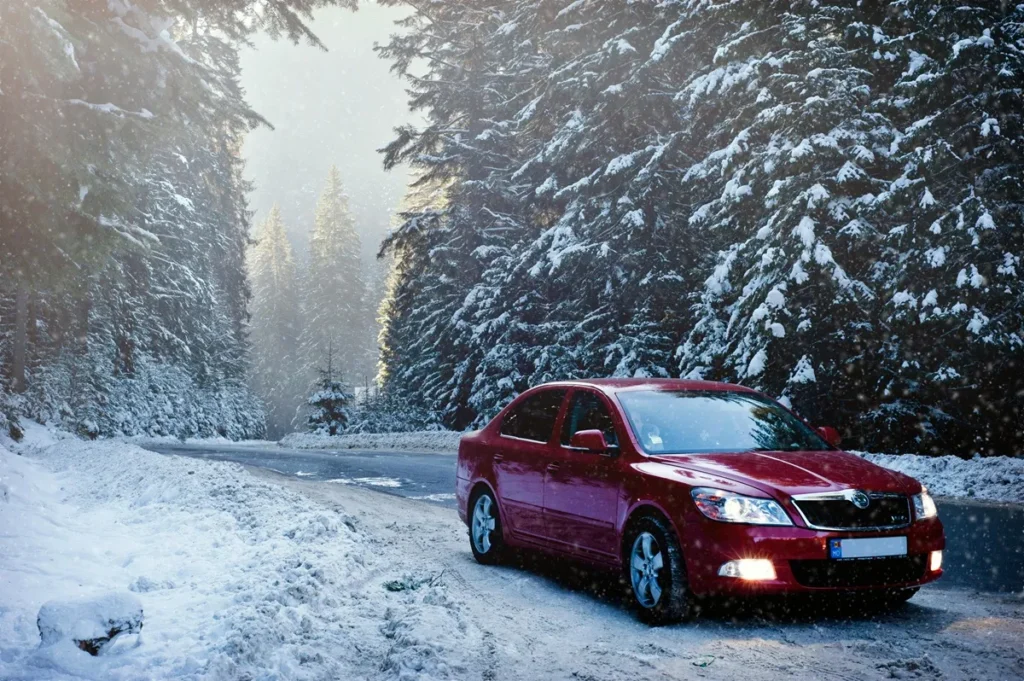
- The Road: The road to Murmansk (the M18) is well-maintained, but you must be comfortable driving on packed snow and ice. Studded tires are mandatory.
The Spring Trap (March to May): Navigating the Rasputitsa
We’ll be blunt: avoid April.
In the West, spring means flowers and gentle rain. In Russia, spring means the “Great Thaw.” This is the season of Rasputitsa, a word that literally means “the time without roads.”
Why the Mud Season Ruins Tires
When the massive Siberian snowpack melts, it has nowhere to go because the ground underneath is still frozen (permafrost).
- The Result: Unpaved roads turn into a thick, clay-like soup. Even heavy duty 4×4 vehicles get stuck.
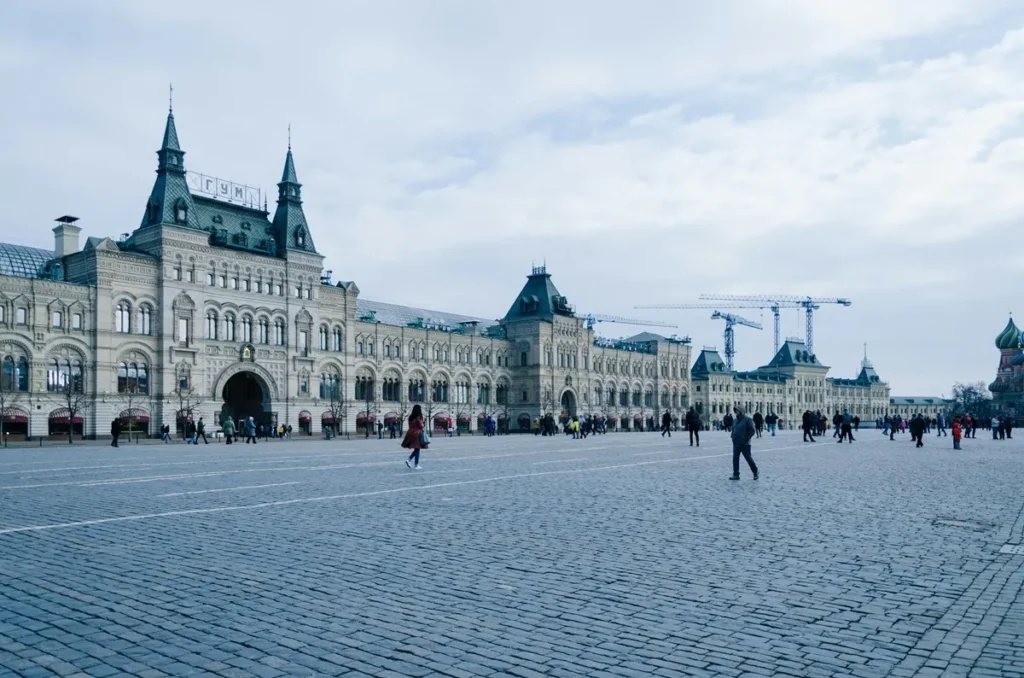
- The Cities: In Moscow and St. Petersburg, the snow turns into a gray slush that covers everything. It’s messy, wet, and generally miserable for walking.
Victory Day: The Only Reason to Go in May
If you must visit in spring, wait until May. By the second week of the month, the ground has mostly dried out, and the trees are starting to bud.
- May 9th: This is Victory Day. It is the most important holiday in the country.
- The Spectacle: Expect massive military parades, flyovers, and fireworks. The energy in the streets is electric. It’s a fascinating look into the Russian soul, but be prepared for massive road closures in city centers.
Regional Deep Dives: Where to be and When
Because Russia is so large, you can’t experience everything in one go. Here is a cheat sheet for the best timing by region.
Central Russia (Moscow, Kazan, Nizhny Novgorod)
- Best Time: May to September.
- The Reason: These cities are best explored on foot. You want the parks to be green and the summer terraces to be open.
- 2026 Note: Moscow has become incredibly tech-forward. You can pay for almost everything via phone apps (if you have a local card), and the city parks are among the best in the world during July.
The Russian South (Sochi, Crimea, Dagestan)
- Best Time: June or September.
- The Reason: July and August are brutally hot and humid in the south. The mountains of Dagestan are spectacular in June when the alpine meadows are in full bloom.
- Road Trip Tip: The mountain roads in the Caucasus are narrow and steep. If you are towing a large trailer, stick to the main coastal highways.
The Wild East (Vladivostok, Kamchatka)
- Best Time: August and September.
- The Reason: This part of the world has a “Monsoon-lite” climate. Early summer is often foggy and rainy. August brings the clearest skies.
- Kamchatka: If you want to see volcanoes and bears, you have a very narrow window. Most mountain camps only open from mid-July to mid-September.
Essential Gear and Logistics for 2026
The world has changed, and so has the way you travel through Russia. Here is what you need to know before you turn the key.
Visa Updates and Border Crossings
In 2026, the Unified E-Visa is your best friend.
- The Rules: It is available to citizens of over 50 countries. It allows you to stay for up to 16 days.
- For Long Trips: If you are doing a cross-country road trip, 16 days isn’t enough. You will need a traditional Tourist Visa, which requires an invitation letter (easily obtained through a travel agency) and allows for 30 to 90 days.
- Border Crossings: Check the status of land borders frequently. While many are open, some specific crossings (like those with Finland or the Baltics) have seen intermittent closures or restrictions in the last few years.
The Financial Situation (Cards vs. Cash)
This is the most critical piece of advice for 2026: Your Western credit cards will not work. Bring Cash: Carry clean, unbent Euro or US Dollar bills. You can exchange these at any bank in the major cities.
- Get a Local Card: Upon arrival, you can get a “Mir” debit card as a foreigner. Apps like Tinkoff or Sberbank allow you to set this up. You deposit your exchanged rubles into an ATM, and then you can use the card for gas stations, groceries, and Yandex apps.
Top Apps for Russian Navigation
Don’t rely on the apps you use at home.
- Yandex Maps: This is the gold standard. It has better lane guidance, real-time traffic, and even shows you where the “speed bumps” are.
- 2GIS: This is the best app for finding specific businesses inside large buildings. It works offline, which is vital for Siberia.
- Yandex Go: The Russian version of Uber. It is incredibly cheap and reliable.
Technical Trailer Tips for the Russian Road
The Russian road network (the Trassa) has improved immensely over the last decade, but it still demands respect.
Fuel Quality and Management
- The “Big Three”: Only fill up at Lukoil, Gazpromneft, or Rosneft. These stations are modern, have clean bathrooms, and offer decent coffee and snacks.
- The “No-Name” Trap: In remote parts of Siberia, you will see rusty pumps with hand-painted signs. Avoid these unless it’s a total emergency. The fuel can be contaminated with water or sediment.
- Fuel Heater: If you are driving a diesel rig in late autumn or winter, ensure your fuel filter has a heater. “Summer Diesel” will wax up at -5°C and leave you stranded.
Communication on the Move
- SIM Cards: Pick up a local SIM from MTS or Megafon. Coverage is surprisingly good even in the middle of the forest.
- Starlink: As of 2026, Starlink is not officially supported in Russia. Do not rely on it for your internet needs while traveling through the interior.
Seasonal Summary Table
| Month | Ideal For | Difficulty (1 to 10) | Why? |
| Jan to Feb | Lake Baikal, Aurora | 9 | Extreme cold, specialized gear required. |
| Mar to Apr | Avoid | 10 | Mud, slush, and impassable dirt roads. |
| May | Victory Day, Cities | 4 | Fresh air, patriotic festivals, rising temps. |
| Jun to Aug | Everything | 2 | Best weather, maximum daylight, easy driving. |
| Sep to Oct | Photography | 3 | Golden foliage, fewer crowds, cool nights. |
| Nov to Dec | Winter Markets | 7 | Early snow, dark days, cozy city vibes. |
The Verdict: When Should You Actually Go?
If you want the most “bang for your buck” and the least amount of stress, target the first two weeks of September. You get the tail end of the summer warmth, the spectacular “Golden Autumn” colors, and the mosquitoes are all dead. It is the perfect temperature for sleeping in a trailer, cool enough for a heavy blanket but warm enough that you don’t need the heater running 24/7.
However, if you are a true adventurer who wants to see something that looks like it belongs on another planet, February at Lake Baikal is the winner. There is nothing else like it on Earth.
Russia is a massive, complex, and deeply rewarding destination for those who value freedom and the open road. Just make sure you respect the calendar. The land is unforgiving to those who ignore the seasons.