- The Cheat Sheet: At a Glance
- Understanding the Danish Elements
- Spring: The Awakening (April to May)
- Summer: The White Nights (June to August)
- Autumn: The Golden Hour (September to October)
- Winter: Dark, Cold, and Cozy (November to March)
- Practical Logistics: Driving Denmark
- The Verdict: When Should YOU Go?
If you ask a Dane when the best time to visit their country is, they will likely look up at the sky, gauge the heavy grey cloud cover, and tell you with a straight face: “Well, it was beautiful ten minutes ago.”
Denmark is a country defined entirely by its relationship with the elements. It is a place where the wind shapes the trees on the West Coast until they grow horizontally. It is a place where the summer sun refuses to set until nearly midnight, and where “bad weather” is simply a cultural excuse to light more candles, bake pastries, and drink stronger coffee.
We have driven a trailer across the flat expanses of the Jutland peninsula in horizontal rain, and we have sat on a Copenhagen pier in glorious, t-shirt weather, sometimes in the same week.
So, when should you go?
If you want the short answer: June through August is the sweet spot for that classic Nordic summer experience.
But if you are hauling a trailer, looking to save cash on the notoriously expensive bridge tolls, or hunting for the authentic “hygge” experience without the tourist crowds, the answer gets a little more complicated.
This is not just a calendar check. This is a deep dive into the rhythms of Danish life, designed for the road tripper who wants the truth, not a brochure.
The Cheat Sheet: At a Glance
If you are currently staring at your vacation calendar and just need the raw data to make a decision, here is the quick breakdown.
By The Numbers
- Peak Season: July to August (Warmest, busiest, most expensive).
- Shoulder Season: May to June & September (Best value, cooler, less traffic).
- Low Season: October to April (Cold, dark, wet, cozy).
Best Times by Activity
- Road Trips & Vanlife: Late May & June. You get the “White Nights” (long daylight for driving) but fewer German caravans clogging the coastal roads than in July.
- Budget Travel: April & September. Campsites drop their rates, and flight prices dip. The weather is a gamble, but the wallet stays happier.
- “Hygge” & Culture: The Christmas markets in Copenhagen and Aarhus are legendary. This is when the Danish concept of coziness actually makes sense.
- Foodies: May (Asparagus season), June (Strawberries and New Potatoes), October (Oyster Safaris). Denmark eats strictly seasonally, and goes when the harvest is in.
Understanding the Danish Elements
Before we break down the months, you need to understand two things that will dictate your trip: The Light and The Wind.
The Light
Denmark is far north. In winter, the sun rises at 8:45 AM and sets at 3:30 PM. It can be disorienting. Conversely, in summer, true darkness never really falls. The sun dips below the horizon, but the sky retains a twilight glow all night.
For a camper or road tripper, this is huge. In June, you can drive, cook, set up camp, and read a book outside until 11:00 PM without artificial light. It changes the entire pace of your travel. You don’t feel the rush to “get there before dark” because dark doesn’t come.
The Wind
Denmark is flat. The highest point in the country is a hill called Møllehøj, standing at a staggering 170 meters (560 ft). Because there are no mountains to block it, the wind sweeps across the country from the North Sea.
If you are towing a high-profile trailer or driving a top-heavy campervan, you must respect the wind, especially on the bridges. The Great Belt Bridge (Storebælt) and the Øresund Bridge can close to light trailers during storms. Always check the forecast.
Spring: The Awakening (April to May)
Spring in Denmark is like watching a slow-motion explosion of green. The grey lifts, the rapeseed fields turn the countryside into a patchwork of neon yellow, and the Danes collectively exhale.
The Vibe
Energetic but chilly. You will see locals sitting outside cafes wrapped in blankets, determined to soak up the sun regardless of the temperature. It’s an optimistic time of year.
For the Road Tripper
This is arguably the best time to drive the Margueriteruten (Daisy Route). This is a 3,700km scenic route that winds through the prettiest parts of the country, marked by signs with a daisy symbol.
In May, the traffic is light. You can pull over at the roadside farm stands (often unmanned, relying on an “honesty box” system) and buy fresh vegetables without fighting crowds.
The Highlight: “Sort Sol” (Black Sun)
If you are in Southern Jutland near the Wadden Sea (Vadehavet) in spring (or autumn), you can witness the Black Sun. This is when up to a million starlings gather at sunset, dancing in complex formations that blot out the sun before settling into the reeds for the night. It is organic, raw, and one of the coolest natural phenomena in Europe.
The “Gotcha”
The weather is fickle. Danes have a saying: “April weather.” It means sunshine, hail, rain, and snow, sometimes all within an hour. You cannot pack light. You need layers.
Summer: The White Nights (June to August)
This is the main event. This is what the brochures sell you, and for once, the reality lives up to the hype.
The Vibe
Euphoric. Danes live for these months. The long, harsh winter is the price they pay for the glory of the Danish summer. The cities empty out as everyone heads to their sommerhus (summer cottage) by the coast.
June: The Sweet Spot
If we had to pick one single month, we would choose June.
- The Light: The days are at their absolute longest.
- The Food: Danish strawberries arrive. They are smaller, redder, and sweeter than what you are used to. Buying a tray from a roadside stand is a rite of passage.
- The Event: Sankt Hans Aften (Midsummer’s Eve) on June 23rd. Every coastal town lights a massive bonfire on the beach to ward off evil spirits (and historically, to burn witches, though now they just burn a straw doll). Watching the fire against the pale midnight sky from the roof of your van is a core memory waiting to happen.
July: The Industrial Holiday
Most of Denmark goes on vacation for the last three weeks of July.
- Pros: Copenhagen is surprisingly quiet and traffic free.
- Cons: The coastal campsites are packed. The West Coast of Jutland (especially around Hvide Sande and Søndervig) becomes a German colony, as thousands of tourists drive north. If you want a prime spot near the dunes, you must book months in advance.
August: The Late Summer Glow
August is often the warmest month, especially the ocean temperature. The Baltic Sea and the North Sea are never “warm” by Mediterranean standards, but in August, they are refreshing rather than shock-inducing.
The “Gotcha”
Cost. Everything is at peak pricing. Ferries, campsites, and rentals. Also, bugs. The mosquitoes near the lakes and fjords can be aggressive in late summer.
Autumn: The Golden Hour (September to October)
Personally, this is our favorite time to drive to Denmark. The light gets lower and softer, turning the beech forests deep orange and gold. The summer crowds vanish, leaving the roads wide open.
The Vibe
Moody, romantic, and wet. It’s “sweater weather” defined. This is when you start to understand why Danes are so good at interior design, they spend a lot of time inside looking out at the rain.
The Foodie Destination: Oyster Safaris
This is the secret weapon of Danish tourism. As the water temperature drops in the Wadden Sea (a UNESCO World Heritage site), the Pacific Oysters become safe to eat.
In October, you can join Oyster Safaris. You put on waders, walk out into the mudflats at low tide, and pick oysters straight from the seabed. You shuck them right there, standing in the ocean, usually accompanied by a glass of champagne provided by the guide. It is wild, muddy, and incredibly delicious.
For the Road Tripper
Wind becomes a factor again. The autumn storms can be intense on the West Coast. However, for surfers and kite surfers, this is paradise. Cold Hawaii (in Klitmøller) comes alive in autumn.
If you are towing, stay updated on bridge conditions. The Storebælt bridge has a dedicated app and SMS service that warns of wind restrictions.
The “Gotcha”
October is statistically the wettest month. If you are camping, you need a rig that doesn’t leak and a good heating system. A tent in Danish October is character-building, to say the least.
Winter: Dark, Cold, and Cozy (November to March)
Let’s be honest: Danish winter is tough. It is grey. It is windy. It is dark for 17 hours a day. But, the Danes have engineered their culture to survive this. This is the season of Hygge.
The Vibe
Hygge is often mistranslated as “cozy.” It’s actually more about conscious comfort and social intimacy as a defense against the dark. It’s about lighting candles at breakfast. It’s about wool socks and hot cocoa.
December: The Exception
December is magical. Danes take Christmas very seriously.
- Tivoli Gardens: The famous amusement park in Copenhagen reopens for the Christmas season. It is filled with snow (often fake, sometimes real), lights, and gløgg (mulled wine with almonds and raisins).
- The Markets: Aarhus, Odense, and Copenhagen are filled with stalls selling crafts and æbleskiver (pancake balls).
January to March: The Grey Zone
Unless you are coming for a specific business reason or to visit museums, this is the hardest time to visit. The Christmas cheer is gone, but the cold remains.
For the Road Tripper
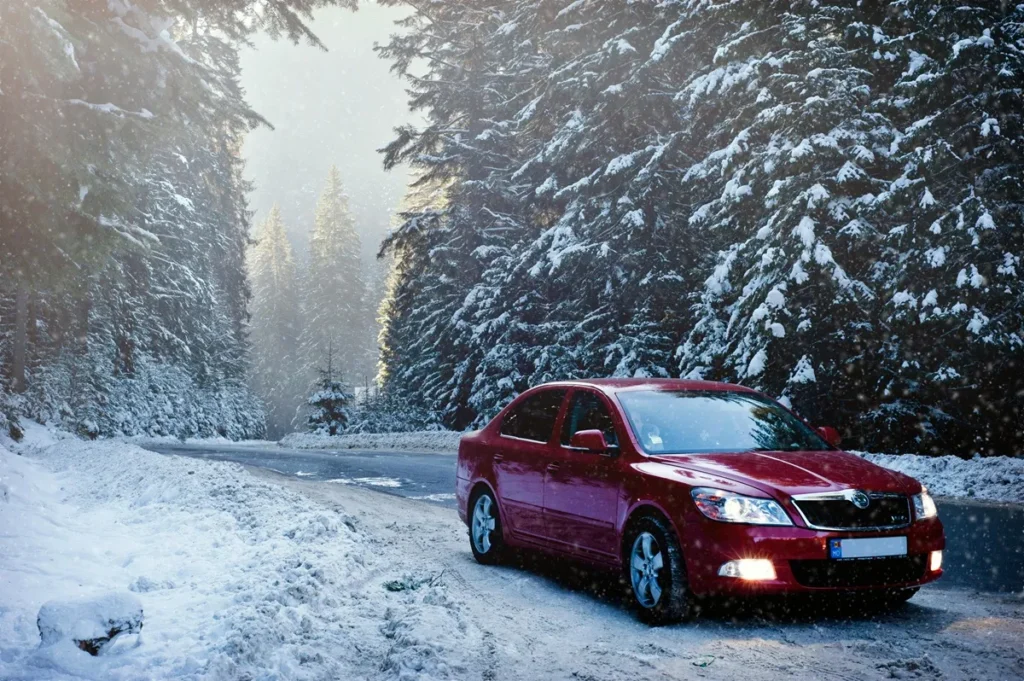
- Winter Tires: If you are driving through Germany or Sweden to get to Denmark, winter tires are legally required in winter conditions. In Denmark, they are not strictly mandatory by law, but they are highly recommended. The roads are well-salted, but black ice is common.
- Campsites: Many campsites close from October to April. You will need to rely on “Quickstops” or year-round sites (often called Helårscamping).
- Van Insulation: Do not attempt a winter trip in an uninsulated van. The humidity combined with the cold digs into your bones.
Practical Logistics: Driving Denmark
Regardless of when you visit, there are some logistical realities you need to account for.
1. The Environmental Zones (Miljøzoner)
If you are driving a diesel vehicle (car, van, or camper) into the major cities like Copenhagen, Aarhus, Odense, or Aalborg, you must have a particulate filter. Older diesel vehicles are banned unless retrofitted. You also need to register your vehicle online before entering these zones to avoid hefty camera-automated fines.
2. The Bridge Tolls vs. Ferries
Denmark is an archipelago. You will be crossing water.
- Storebælt Bridge: Connects Zealand (Copenhagen) to Funen. It costs roughly €30 to €43 USD one way for a car, more for a trailer.
- Øresund Bridge: Connects Denmark to Sweden. Expensive (€43 plus USD).
- Ferries: Sometimes, taking a ferry (like the Molslinjen between Jutland and Zealand) saves you miles and gas money compared to driving the long way around the bridges. Book these in advance for dynamic pricing.
3. Wild Camping is Illegal
You cannot just pull over and sleep in a field or a beach parking lot in Denmark. You will get fined. However, look for “Fri Teltning” (Free Tenting) forests. The Danish Nature Agency has designated over 275 forests where you can pitch a tent for free for one night. For campervans, you must use designated campsites or “Pintrip” (a network of farm stays similar to Harvest Hosts in the US).
The Verdict: When Should YOU Go?
Let’s break it down to your specific travel style.
Go in June if: You want the perfect balance. You want the long daylight hours for exploring, the fresh produce, and the happy locals, but you want to avoid the absolute peak density of German tourists that arrive in July. This is the golden month.
Go in September if: You are a photographer, a couple, or a solo traveler. You want to see the museums without lines, you want to drive the Daisy Route at your own pace, and you appreciate a moody, atmospheric landscape.
Go in December if: You love Christmas markets and city breaks. Leave the trailer at home, book a hotel in Copenhagen, and drink gløgg until you feel warm.
Avoid November and February if: You struggle with Seasonal Affective Disorder (SAD) or dislike rain. These are the “grey months” where even the Danes struggle to keep the spirits high.
Denmark is not a tropical paradise, but that is part of the charm. It is a country that forces you to engage with the environment. Whether you are drinking a cold Tuborg on a sun-drenched dock in July or hunting for amber on a windy beach in October, the country has a way of getting under your skin.
Just remember the golden rule of Nordic travel: There is no such thing as bad weather, only bad clothing.
Pack a rain jacket, bring a sense of humor, and we’ll see you on the road.