- La Fortuna and Arenal: The Adventure Hub
- Manuel Antonio: The Wildlife Guarantee
- Monteverde: Living in the Clouds
- Santa Teresa and the Nicoya Peninsula: The Surf Frontier
- Puerto Viejo: The Caribbean Soul
- The Osa Peninsula: The Final Frontier
- Practical Road Trip Tips for Costa Rica
- Cultural Etiquette and the Pura Vida Mindset
- Best Time to Visit: Timing Your Trip
- Camping and Trailers in Costa Rica
- The Verdict: Which Spot Wins?
We’ve spent hundreds of hours behind the wheel in Costa Rica, navigating everything from smooth highways to river crossings that make your heart skip a beat. If you are looking for a generic vacation, look elsewhere. We are here to talk about the grit, the dust, and the rewards of exploring this country with a rig or a rental 4×4.
Choosing the “best” place in Costa Rica is a trap because the country is divided by jagged mountain ranges and distinct microclimates. What works for a surfer won’t work for a birdwatcher. We’ve broken down the top contenders based on accessibility, wildlife, and that raw “road trip” factor that defines the Your Travel Trailer community.
La Fortuna and Arenal: The Adventure Hub
If you only have a week, you can go to La Fortuna. It is the powerhouse of the northern highlands and serves as the most reliable base for anyone traveling with a trailer or a camper van. The roads here are mostly paved, which is a luxury in this part of the world.
The centerpiece is the Arenal Volcano. It is a massive, conical giant that dominates the skyline. While you can’t climb the volcano itself, the surrounding park offers trails over old lava flows.
Why we love it for road trippers:
- Ease of Access: You don’t need a high-clearance vehicle to get to the main town.
- Natural Hot Springs: There are dozens of spots, ranging from expensive resorts to free river locations under the bridge near Tabacon.
- The Lake: Lake Arenal offers some of the best windsurfing and sunset views in Central America.
The infrastructure in La Fortuna is top-tier. You will find reliable grocery stores like Super Christian and plenty of secure spots to park a larger rig. It is the perfect place to shake down your gear before heading into the more rugged coastal regions.
Manuel Antonio: The Wildlife Guarantee
We often hear people complain that Manuel Antonio is too touristy. They aren’t wrong. However, we still put it on the list because it is the most consistent place to see three-toed sloths and squirrel monkeys within a two-hour window.
The national park is small, but it is packed with biodiversity. You are almost guaranteed to see capuchin monkeys trying to steal snacks from unsuspecting tourists on the beach. Don’t be that tourist; keep your bags zipped and your food hidden.
Pro-tips for the park:
- Buy tickets in advance: They are digital now and sell out days or weeks ahead.
- Go early: The park opens at 7:00 AM. Be at the gate by 6:30 AM to beat the heat and the largest crowds.
- Hire a guide: Unless you have a high-powered spotting scope, you will miss the sloths sleeping 50 feet up in the canopy.
The drive from San Jose to Manuel Antonio is straightforward via Route 27 and the Costanera Sur (Route 34). It’s a flat, scenic drive that takes about three hours. Just watch out for the “Crocodile Bridge” over the Tarcoles River on your way down. It’s a mandatory stop for any road trip.
Monteverde: Living in the Clouds
If you hate the heat, point your rig toward the mountains. Monteverde sits in a cloud forest at an elevation that requires a light jacket, even in the middle of the dry season. The air is thin, cool, and smells like damp earth and moss.
The roads to Monteverde have improved, but they are still steep and winding. If you are towing a trailer, make sure your brakes are in good shape and your transmission cooler is working. The climb from the Pan-American Highway is a test of patience and horsepower.
What to do in the clouds:
- Hanging Bridges: Walking through the canopy gives you a perspective you can’t get from the ground.
- Night Tours: This is when the forest wakes up. You’ll see glass frogs, tarantulas, and sleeping toucans.
- Coffee Tours: Some of the best beans in the world are grown in this volcanic soil.
Monteverde is quieter than La Fortuna. It feels more intentional and focused on conservation. It is a place to slow down, drink a lot of local coffee, and listen to the wind howling through the trees.
Santa Teresa and the Nicoya Peninsula: The Surf Frontier
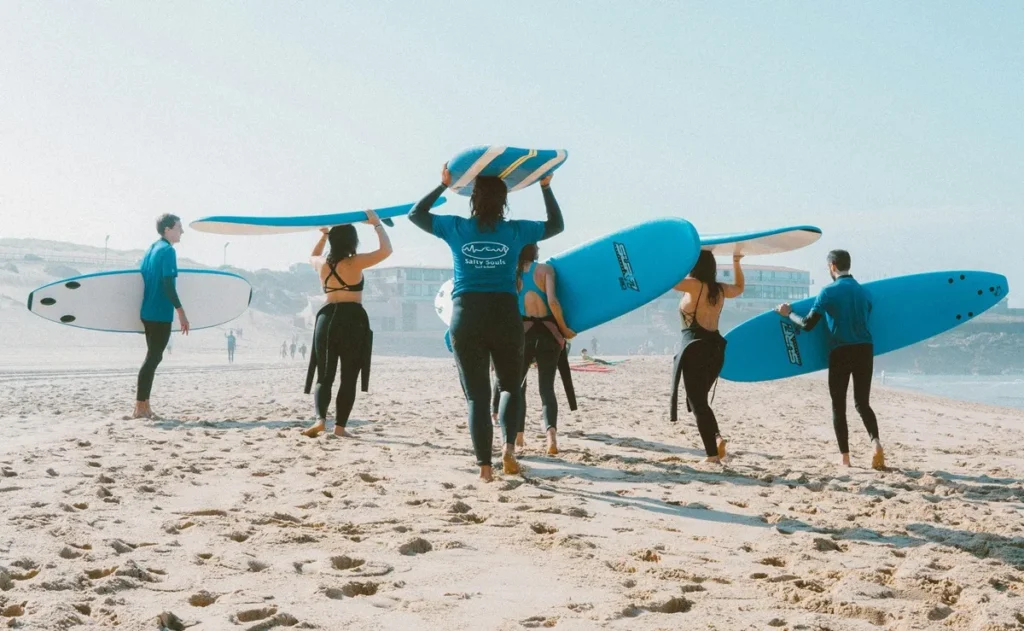
This is where the pavement ends and the real adventure begins. Santa Teresa used to be a sleepy fishing village. Now, it’s a global surf destination with a rugged, dusty vibe. To get here with a trailer, we recommend taking the ferry from Puntarenas to Paquera. It saves your suspension and offers a great view of the Gulf of Nicoya.
The main road in Santa Teresa is unpaved and notoriously bumpy. During the dry season (December to April), it is a dust bowl. During the green season (May to November), it is a mud pit. You will want a 4×4 here, especially if you plan on exploring the backroads toward Nosara.
The Santa Teresa Vibe:
- World-Class Surf: Breaks like La Lora and Playa Hermosa are consistent year-round.
- Sunset Culture: Every evening, the entire town moves to the beach to watch the sun dip into the Pacific.
- Health and Wellness: There are more yoga studios here than grocery stores.
We love the Nicoya Peninsula because it is a “Blue Zone,” one of the few places in the world where people consistently live past 100. Maybe it’s the water, or maybe it’s the lack of stress. Either way, it’s a place that forces you to move at a slower pace.
Puerto Viejo: The Caribbean Soul
The Caribbean side of Costa Rica feels like a different country. The language, the food, and the rhythm are all distinct. While the Pacific side is about sunsets and surf, the Caribbean side is about turquoise water, reggae, and spicy coconut-based stews (Rondon).
Puerto Viejo de Talamanca is the main hub. From here, you can bike or drive south toward Cahuita or Manzanillo. The road is flat and hugs the coastline, making it one of the most scenic stretches for a road trip.
Caribbean Highlights:
- Cahuita National Park: One of the few parks in Costa Rica that is free (donations are encouraged). The trail runs right along the white sand beach.
- Jaguar Rescue Center: An incredible place to see rehabilitated animals and learn about local wildlife.
- Chocolate Tours: The Caribbean coast is the heart of Costa Rican cacao production.
The weather here doesn’t follow the same rules as the rest of the country. September and October, which are the rainiest months on the Pacific, are often the sunniest and calmest on the Caribbean side. Keep that in mind when planning your route.
The Osa Peninsula: The Final Frontier
For the truly adventurous who want to get as far away from civilization as possible, there is the Osa Peninsula. This is the home of Corcovado National Park, which National Geographic famously called “the most biologically intense place on Earth.”
Getting here is a commitment. If you are driving to Drake Bay, you have to cross several rivers. Do not attempt this in a low-clearance vehicle or during a heavy rainstorm. Most people leave their rigs in Sierpe and take a boat through the mangroves to reach the peninsula.
Why it’s worth the effort:
- Unrivaled Wildlife: This is the only place in Costa Rica where you can see all four species of monkeys, plus tapirs and scarlet macaws in abundance.
- Primary Rainforest: The trees here are massive, some reaching heights of 200 feet.
- Solitude: You won’t find crowds here. It’s just you, the jungle, and the ocean.
If you are a serious photographer or a nature nerd, the Osa Peninsula is the best place in Costa Rica, period. It is raw, humid, and occasionally difficult, but the payoff is a glimpse of the world as it looked before humans moved in.
Practical Road Trip Tips for Costa Rica
We’ve learned a few lessons the hard way so you don’t have to. Driving in Costa Rica is an art form, and navigating with a trailer adds a layer of complexity.
1. Navigation is Tricky
Don’t rely solely on Google Maps. It often tries to take you on “shortcuts” that turn out to be private farm roads or impassable river crossings. Use Waze. It is the gold standard in Costa Rica because locals report potholes, police stops, and landslides in real-time.
2. The “Bridge” Rule
On many rural roads, bridges are one-way. There is usually a sign that says “Ceda el Paso” (Yield). The side with the sign must wait for oncoming traffic to clear before crossing. If you are towing a trailer, be extra cautious, as some of these bridges are narrow and have low weight limits.
3. Gas Up Early
Gas stations (Bombas) can be far apart once you leave the main highways. Most are full-service, meaning an attendant will pump the gas for you. You can pay with a credit card, but it’s always good to have some Colones (local currency) on hand just in case the card reader is down.
4. Potholes are a Sport
The roads can change overnight during the rainy season. A perfectly smooth road on Monday can be full of “tank-traps” by Wednesday. Keep your eyes on the road and avoid driving at night. Unmarked speed bumps (muelles) are also common and can do serious damage to your suspension if hit at speed.
Cultural Etiquette and the Pura Vida Mindset
You will hear “Pura Vida” a dozen times a day. It means “Pure Life,” but it’s used for everything: hello, goodbye, everything is good, or even “I’m sorry I’m late.”
How to be a good guest:
- Learn basic Spanish: A simple “Hola” and “Gracias” goes a long way.
- Support the “Sodas”: These are small, family-owned restaurants. The food is cheap, healthy, and authentic. Order a “Casado”, a plate with rice, beans, salad, plantains, and a protein.
- Slow Down: Things take longer in Costa Rica. The bank line might be an hour long. The food might take 40 minutes to arrive. Relax. You’re on Tico time now.
Sustainability is a big deal here. Costa Rica aims to be plastic-free and carbon-neutral. Carry a reusable water bottle (the tap water is safe to drink in most of the country) and avoid single-use plastics whenever possible.
Best Time to Visit: Timing Your Trip
The “Best” time depends on your tolerance for rain and your budget.
| Season | Months | Pros |
Cons |
| Dry Season |
Dec – April |
Constant sun, easy driving |
High prices, very crowded |
| Shoulder Season |
May – June, Nov |
Greener landscapes, lower prices |
Occasional afternoon rain |
| Green Season |
July – Oct |
Best wildlife viewing, no crowds |
Heavy rain, difficult roads |
We personally love the shoulder season. The dust of the dry season has settled, the jungles are vibrant green, and the prices haven’t peaked yet. Plus, you don’t have to fight for a spot at the popular campsites.
Camping and Trailers in Costa Rica
Is Costa Rica trailer-friendly? The short answer is: yes, but with caveats.
You won’t find the massive RV parks with full hookups that are common in the US or Europe. Instead, you will find “iOverlander” spots, eco-lodges that allow parking, and some beach areas where boondocking is tolerated.
Camping Tips:
- Security First: Never leave your rig unattended in a remote area. Use paid parking lots or established campsites.
- Power and Water: Most campsites will offer a garden hose for water and maybe a standard outlet. Don’t expect 50-amp service.
- Leveling: The ground is rarely flat. Bring a good set of leveling blocks.
The “Van Life” movement is growing in Costa Rica, so more formal campsites are popping up every year. Places like Nearndental in Uvita or various spots around Lake Arenal are becoming hubs for travelers like us.
The Verdict: Which Spot Wins?
If we had to pick just one “Best Place” for a first-timer on a road trip, it would be La Fortuna. It offers the most “bang for your buck” in terms of scenery, activities, and ease of travel. It is the heart of the country for a reason.
However, if you have a 4×4 and a sense of adventure, The Nicoya Peninsula is where you will find the freedom that road tripping is all about. There is nothing quite like driving down a dirt road with the ocean on one side and the jungle on the other, knowing your next campsite is just around the corner.
Costa Rica isn’t a place you visit, it’s a place you feel. Whether you are soaking in a hot spring in Arenal or watching a scarlet macaw fly over your camp in the Osa, the country has a way of stripping away the stress of the “real world.”
Pack your gear, double-check your spare tire, and get down here. The Pura Vida life is waiting for you.