- Elafonissi Beach, Crete
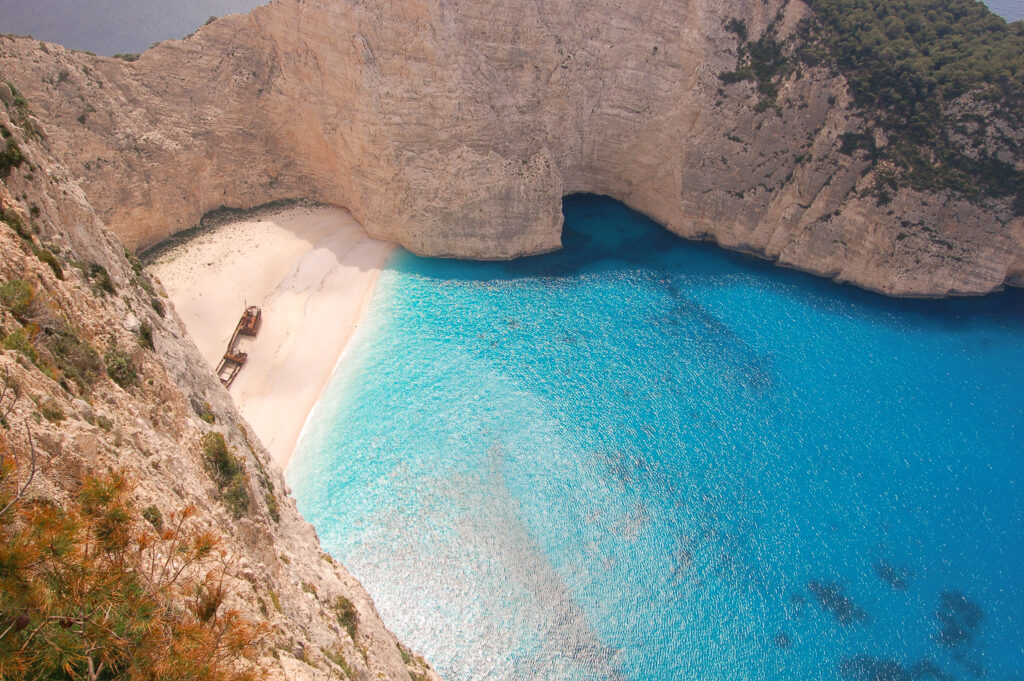
- Navagio Beach, Zakynthos
- Balos Lagoon, Crete
- Sarakiniko, Milos
- Porto Katsiki, Lefkada
- Myrtos Beach, Kefalonia
- Voidokilia, Peloponnese
- Agios Prokopios, Naxos
- Seychelles Beach, Ikaria
- Voutoumi, Anti Paxos
- Plaka Beach, Naxos
- Apella Beach, Karpathos
- Kolymbithres, Paros
- Prasonisi, Rhodes
- Vai Beach, Crete
Forget everything you’ve seen on postcards. The reality of stepping off a ferry into the dry, salt-heavy Aegean air is ten times better.
You are dragging your duffel bag across cobblestones, the smell of grilling souvlaki hitting you, knowing you are about to see the Best Beaches in Greece.
I’ve driven beat-up rental cars across the Peloponnese and taken rocky ferries to islands you can barely see on a map.
Greece isn’t just a single destination; it’s thousands of jagged coastlines waiting for tire tracks and footprints.
Let’s cut through the tourist traps and talk about where you actually want to park your travel trailer or rental jeep.
These are the sandy, pebbled, and cliff-lined shores worth crossing oceans for.
Elafonissi Beach, Crete
You’ve probably heard rumors about pink sand. I’m here to tell you it’s real, and it’s spectacular.
Elafonissi sits on the southwestern edge of Crete, requiring a drive through winding mountain gorges.
The sand gets its pink hue from crushed shells, contrasting sharply with the shallow, warm lagoon water.
- Why it’s worth the drive: It feels like walking into a massive, natural swimming pool.
- Road Trip Tip: The road from Chania takes about 90 minutes. Start at dawn to beat the tour buses.
- What to pack: Wind-resistant gear. The offshore breeze can whip up the sand by mid-afternoon.
You can wade across the ankle-deep water to the actual island of Elafonissi.
This area is a protected nature reserve, meaning no massive concrete hotels block your view.
It’s raw, windy, and entirely unforgettable.
Navagio Beach, Zakynthos
Look over the limestone cliffs of Zakynthos, and you’ll see the rusted hull of the MV Panagiotis sitting on pristine white pebbles.
This spot is strictly accessible by boat, but the real show is from the viewing platform up top.
The water here is an electric, almost neon blue that defies camera filters.
- How to see it: Rent a private boat from Porto Vromi rather than joining a massive group tour.
- Timing is everything: Go late in the afternoon when the sun hits the water directly, illuminating the cove.
- Safety first: The cliffs are crumbly. Stay behind the designated viewing lines if you drive to the top.
This is not a spot for a quiet afternoon nap.
It’s a visual spectacle that demands respect and a good pair of hiking shoes for the upper viewpoints.
Balos Lagoon, Crete
If Elafonissi is the approachable friend, Balos is the wild, untamed cousin.
Getting here involves driving a 4×4 down a rugged, unpaved dirt track on the Gramvousa Peninsula.
Once you park, you face a steep, rocky hike down to the lagoon.
- The Vibe: Rugged isolation meeting shallow, warm waters.
- The Challenge: The hike back up to the parking lot in the midday sun is brutal. Bring twice as much water as you think you need.
- Alternative Route: You can take a ferry from Kissamos, but driving gives you the freedom to dictate your own schedule.
The water is incredibly shallow, making it perfect for wading.
You’ll share the beach with wild goats rather than luxury cabanas.
This is the exact type of raw nature that overland travelers crave.
Sarakiniko, Milos
Sarakiniko doesn’t feel like a beach; it feels like walking on the moon.
Years of wind and saltwater have carved the stark white volcanic rock into smooth, sweeping curves.
There is almost no sand here, just chalky white cliffs dropping into deep sapphire water.
- The Activity: Cliff jumping. There are natural platforms of varying heights perfect for plunging into the Aegean.
- When to visit: Arrive at sunrise. The morning light hitting the white rocks is phenomenal.
- Photography Tip: The contrast between the rock and the sea is intense; polarized sunglasses are a necessity.
You lay your towel directly on the sun-warmed stone.
It’s unconventional, slightly uncomfortable, and entirely mesmerizing.
Milos is gaining popularity, so explore the western, unpaved side of the island in your vehicle afterward.
Porto Katsiki, Lefkada
Lefkada is a road tripper’s dream because it’s connected to the mainland by a floating bridge. No ferries required.
Porto Katsiki is the crown jewel of the island’s western coast.
Massive, sheer limestone cliffs form a dramatic backdrop to a strip of white pebbles.
- The Access: You’ll park at the top and walk down about 100 steep steps carved into the cliff face.
- The Water: It drops off quickly and gets deep fast, ideal for strong swimmers.
- The Logistics: Parking is tight. If you are hauling a trailer, park early or find a spot further up the road.
The sun doesn’t hit the beach until mid-morning due to the towering cliffs.
Once it does, the water glows a milky, vibrant blue.
It’s a striking environment that makes you feel incredibly small.
Myrtos Beach, Kefalonia
Driving down the winding, hairpin mountain road to Myrtos is half the adventure.
This is the beach that makes people fall in love with the Ionian Islands.
It’s a massive crescent of blindingly white cobblestones meeting deep, churning blue water.
- The Environment: There is no natural shade. Bring a heavy-duty umbrella that can withstand the coastal breeze.
- The Swell: The waves here can be aggressive. Keep an eye on the undertow if you wade in.
- The Sunset: Do not leave before evening. Watching the sun dip below the horizon from the mountain road above is mandatory.
The stones can be rough on your feet, so water shoes are a smart addition to your gear.
Myrtos remains surprisingly undeveloped.
You won’t find rows of noisy beach bars, just the sound of the surf dragging the stones back and forth.
Voidokilia, Peloponnese
Let’s shift to the mainland. The Peloponnese is prime road trip territory, filled with olive groves and ancient ruins.
Voidokilia is shaped like a perfect Omega (Ω) and is steeped in Greek mythology.
It’s a lagoon sheltered by sand dunes, offering calm, crystal-clear swimming conditions.
- The History: Hike up to Nestor’s Cave on the southern end, where Hermes allegedly hid Apollo’s stolen cattle.
- The Hike: Continue past the cave to the ruins of Old Navarino Castle for a panoramic view of the bay.
- The Terrain: The roads leading here are flat and easy to navigate with a travel trailer.
Bird watchers will love the nearby Gialova Lagoon, a major rest stop for migratory birds.
It’s a quiet, historical spot that feels entirely separate from the chaotic island circuits.
Agios Prokopios, Naxos
If you want miles of golden sand without the pretentious club scene, Naxos is your island.
Agios Prokopios offers over a mile of thick, soft sand and water that is remarkably calm.
It’s heavily organized near the village but quickly turns wild and empty as you walk south.
- The Vibe: Laid-back, unpretentious, and focused on good food and easy swimming.
- The Food: Walk into the nearby village for some of the best traditional Naxian potatoes and local cheese.
- The Wind: Naxos is famously windy, but this beach is naturally protected from the fierce northern Meltemi winds.
It’s an excellent base camp if you are exploring the Cyclades.
You can park your rig nearby, grab a cold Mythos beer, and float in water that looks like liquid glass.
Seychelles Beach, Ikaria
Ikaria is known as a “Blue Zone,” a place where locals routinely live past 100 years old.
The island moves at its own incredibly slow pace, and Seychelles Beach reflects that rugged, timeless attitude.
Created accidentally by a landslide during a tunnel construction, it features smooth granite boulders and emerald water.
- The Access: You have to scramble down a rough, unmarked goat path to get there. It takes effort.
- The Setting: Surrounded by underwater caves, making it a spectacular spot for snorkeling.
- The Mindset: Leave your watch in the car. Time doesn’t matter on Ikaria.
There are no facilities here. Bring everything you need and pack everything out.
It’s wild, isolated, and requires a genuine sense of adventure.
Voutoumi, Anti Paxos
Anti Paxos is a tiny speck of an island south of Corfu, covered almost entirely in vineyards.
Voutoumi is its main draw, featuring water so clear it looks like the boats are levitating.
You cannot bring a car here; you have to take a sea taxi from the neighboring island of Paxos.
- The Experience: Renting a small motorboat for the day is the ultimate way to explore the coves at your own pace.
- The Terrain: The beach is pebbly at the shore but turns to pure, soft white sand once you get into the water.
- The Reward: Hike the steps up to the Bella Vista taverna for a sweeping view of the bay while eating fresh calamari.
It gets crowded with day-trippers from yachts between noon and 4 PM.
If you manage to secure a boat rental, arrive early to claim your piece of sand.
Plaka Beach, Naxos
We are heading back to Naxos because one beach isn’t enough for this massive island.
Plaka is the natural continuation of Agios Prokopios, stretching for miles down the western coast.
It is characterized by large, natural sand dunes and a distinct lack of heavy development.
- The Drive: A dusty dirt road runs parallel to the beach, perfect for off-road vehicles and adventurous drivers.
- The Space: Because it’s so long, you can always find a secluded spot, even in the peak of August.
- The Extras: Nudism is common on the southern end, reflecting the true freedom of the Greek beach culture.
This is the kind of beach where you bring a good book and stay until the sun drops behind the neighboring island of Paros.
The vibe is entirely bohemian.
Apella Beach, Karpathos
Karpathos sits between Crete and Rhodes, often ignored by first-time visitors.
That’s a massive mistake, especially if you have a reliable vehicle to handle the steep mountain passes.
Apella is surrounded by pine trees that grow right down to the rocky shoreline.
- The Contrast: The deep green of the pines against the electric blue of the water is visually striking.
- The Snorkeling: The rocky seabed near the edges of the cove hides octopus and colorful local fish.
- The Road: The drive down is not for the faint of heart. It’s narrow, steep, and winding.
This beach rewards those willing to go off the standard tourist trail.
It feels remote, wild, and incredibly authentic.
Kolymbithres, Paros
Paros is famous for its marble, and Kolymbithres beach showcases this geological history beautifully.
Instead of a long stretch of sand, the beach is divided into tiny coves separated by smooth, granite rock formations.
The rocks look like they’ve been sculpted by modern artists, smoothed by millions of years of wind and waves.
- The Setup: You can wedge yourself into a private cove if you arrive early enough.
- The Water: The coves act like natural swimming pools, keeping the water flat and warm.
- The Convenience: It’s located just across the bay from Naoussa, making it easy to reach by car or small water taxi.
The water here stays shallow for a long time.
It’s a visually unique spot that breaks up the monotony of standard sandy stretches.
Prasonisi, Rhodes
For the travelers who want adrenaline rather than relaxation, Prasonisi is the ultimate destination.
Located at the extreme southern tip of Rhodes, it is a strip of sand that connects the mainland to a small peninsula.
During high tide, the sea covers the sand, turning the peninsula into an island.
- The Action: This is a world-renowned spot for windsurfing and kiteboarding.
- The Conditions: The Aegean Sea on one side brings aggressive waves, while the Mediterranean side offers flat, calm water.
- The RV Life: It’s a legendary spot for van-lifers and trailer travelers who park directly on the hard-packed sand.
You can watch hundreds of colorful kites catching the relentless wind.
It’s high-energy, salty, and totally driven by the elements.
Vai Beach, Crete
We end our journey back on Crete, on the far eastern edge of the island.
Vai is famous for one distinct reason: it is home to the largest natural palm forest in Europe.
Walking onto the sand feels like you’ve been teleported to the Caribbean or North Africa.
- The Scenery: Thousands of date palms back the golden sand, providing natural, dappled shade.
- The Drive: Getting to the eastern edge of Crete takes commitment, but the roads are well-maintained.
- The Tip: Climb the stairs to the observation deck on the right side of the beach for the best panoramic photograph.
It’s a bizarre and beautiful ecological anomaly.
The water is clear, the sand is warm, and the palm fronds rattle in the wind.
It’s the perfect place to park the trailer, open a map, and figure out where the road is taking you next.
CALL TO ACTION & VISIT
You don’t need a strict itinerary; you just need a set of keys and a sense of direction.
Stop waiting for the perfect time to explore these coastlines.
Get your gear sorted, check your tires, and start planning your route across the Aegean.
If you are ready to build out your ultimate road trip setup, head over to the main page.
Check out our latest guides on trailer maintenance and off-grid power solutions for your next big overland trip.
CONCLUSION
Greece will ruin you for other coastal destinations.
Once you’ve navigated a dirt road to a deserted cove and swam in water clearer than glass, standard resorts just won’t cut it.
These fifteen locations aren’t just places to get a tan; they are rewards for taking the difficult road.
Whether you are hauling a massive rig through the Peloponnese or renting a tiny hatchback on an island, the journey is half the point.
Keep the dust on your boots, respect the local environment, and go find your own stretch of sand.