
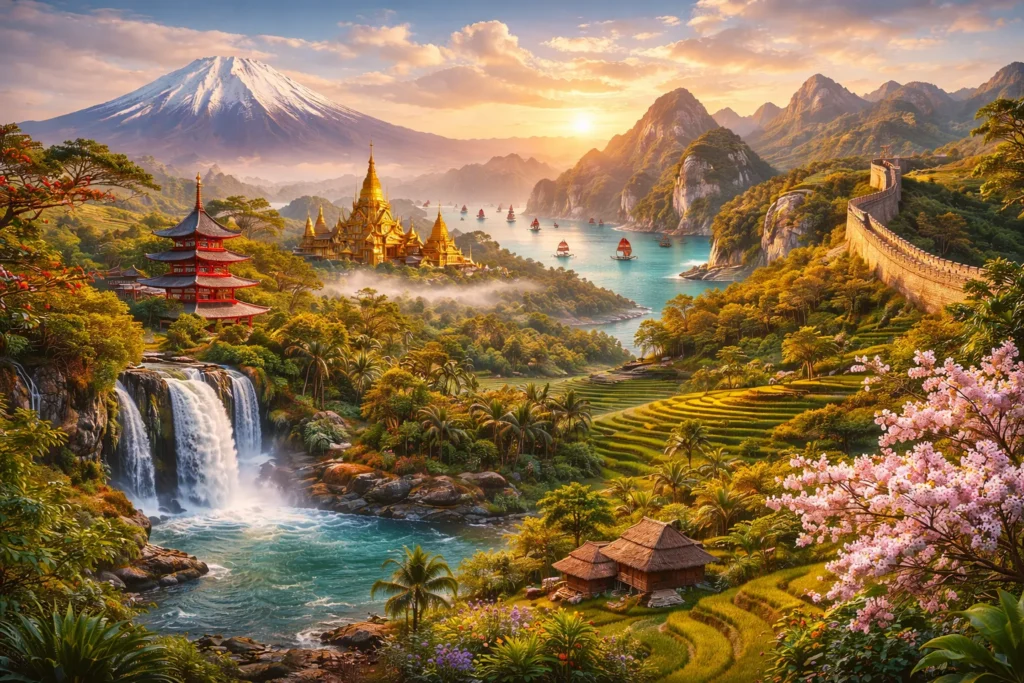
Asia: The Ultimate Guide to the World’s Most Diverse Continent
When you look at a map of the world, your eyes naturally gravitate toward the massive landmass on the right. That’s Asia. It is not just a continent; it is a collection of worlds so distinct from one another that it sometimes feels impossible they share the same tectonic plate. For us here at Your Travel Trailer, Asia isn’t just a destination it’s the big leagues of travel. It is where you go to have your senses overwhelmed, your comfort zone shattered, and your understanding of history completely rewritten.
Spanning from the frozen tundra of Siberia to the steamy jungles of Indonesia, and from the scorched deserts of the Middle East to the neon-lit streets of Tokyo, this place is huge. We are talking about 30% of the Earth’s land area and 60% of the human population. But numbers don’t tell the story. The smell of burning incense in a Kyoto temple, the chaotic symphony of honking horns in Mumbai, and the silence of the Himalayas do.
If you are planning a trip here, you might feel overwhelmed. Where do you even start? This guide is going to break it all down for you region by region, flavor by flavor. We are going deep into the geography, the culture, the food, and the practical tips you need to navigate the Dragon of the East.

The Lay of the Land: A Geographic Beast
Understanding the physical layout of Asia helps you plan your trip because geography here dictates everything from the weather to the food on your plate.
Imagine the continent anchored by a massive spine of mountains. The Himalayas are the stars here, separating the Indian subcontinent from the rest of Asia. This is where you find Mount Everest and the high-altitude Tibetan Plateau. If you love trekking, cold air, and dramatic vistas, this central belt is your playground.
Flowing down from these heights are the rivers that built civilizations: the Ganges, the Mekong, the Yangtze, and the Yellow River. These river basins are where humanity clustered for thousands of years. They are flat, fertile, and densely populated.
Then, you have the edges. To the east and southeast, the continent shatters into thousands of islands. The Philippines, Indonesia, and Japan sit on the “Ring of Fire,” a volatile horseshoe of volcanoes and earthquakes. It sounds scary, but it creates some of the most beautiful landscapes on earth—black sand beaches, smoking craters, and nutrient-rich soil that makes the jungles explode with green.
To the west, the land dries out. The lush green fades into the arid deserts of the Gobi and the Arabian Peninsula. It is a harsh beauty, defined by sand dunes, camels, and oases that look like they were plucked from a storybook.
East Asia: Where Tradition Meets the Future
Let’s start in the east. This region—China, Japan, South Korea, Taiwan—is usually what people think of when they hear "modern Asia," but it is deeply rooted in ancient history.
Japan
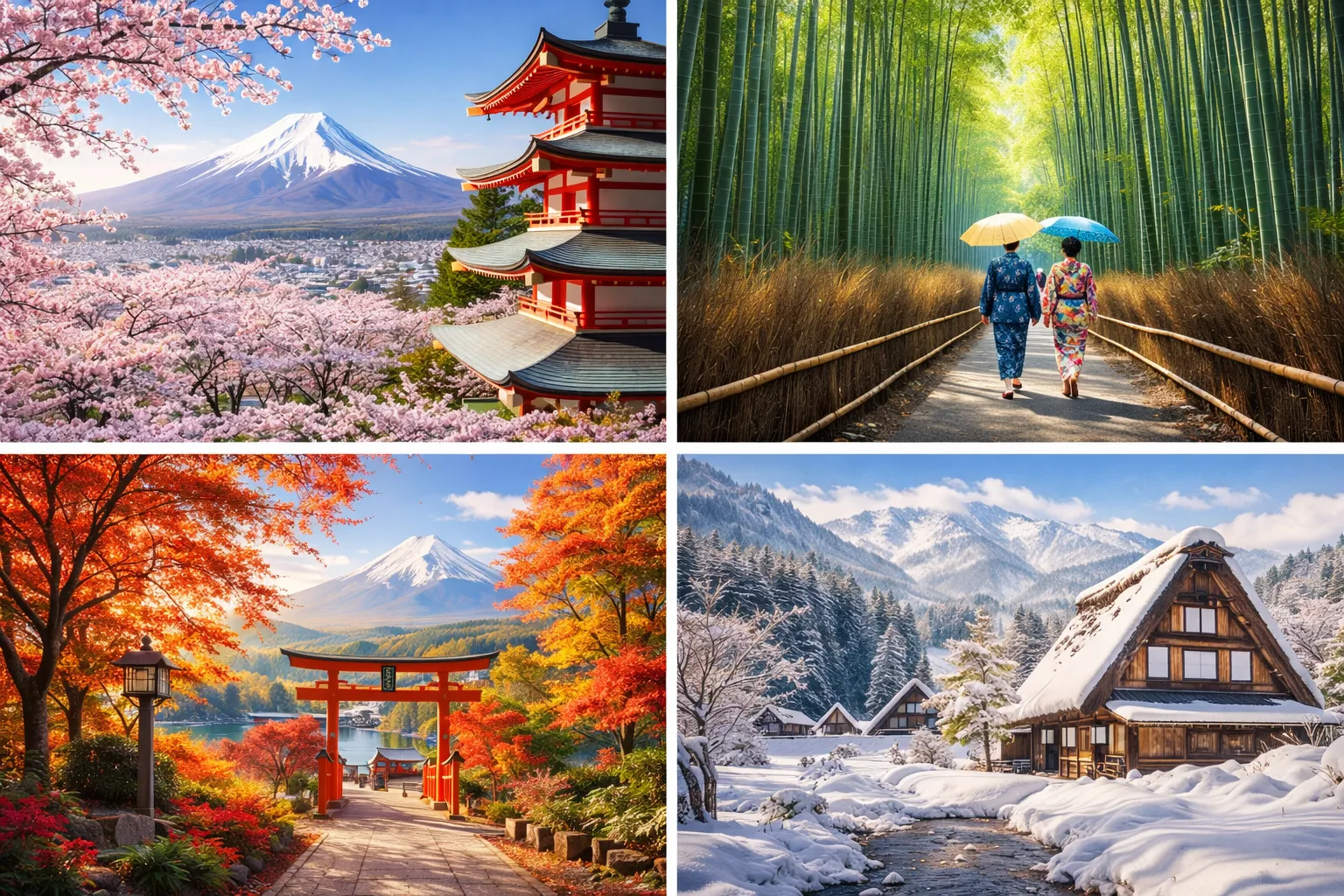
Japan is a country of perfectionists. Everything here works. The trains run to the second, the streets are spotless, and the food is an art form. Tokyo is the entry point for most, a sprawling metropolis that feels like a sci-fi movie. But hop on a Shinkansen (bullet train), and in two hours you are in Kyoto, walking through wooden temples that have stood for centuries.
The geography here is mountainous, which means the cities are crammed into the flat coastal plains. It makes for incredible density, but it also means nature is never far away. A quick train ride gets you into the Japanese Alps for skiing or hiking. The cultural code here is built on respect and harmony. As a traveler, you just need to be polite, quiet on public transport, and willing to try whatever food is put in front of you.
China
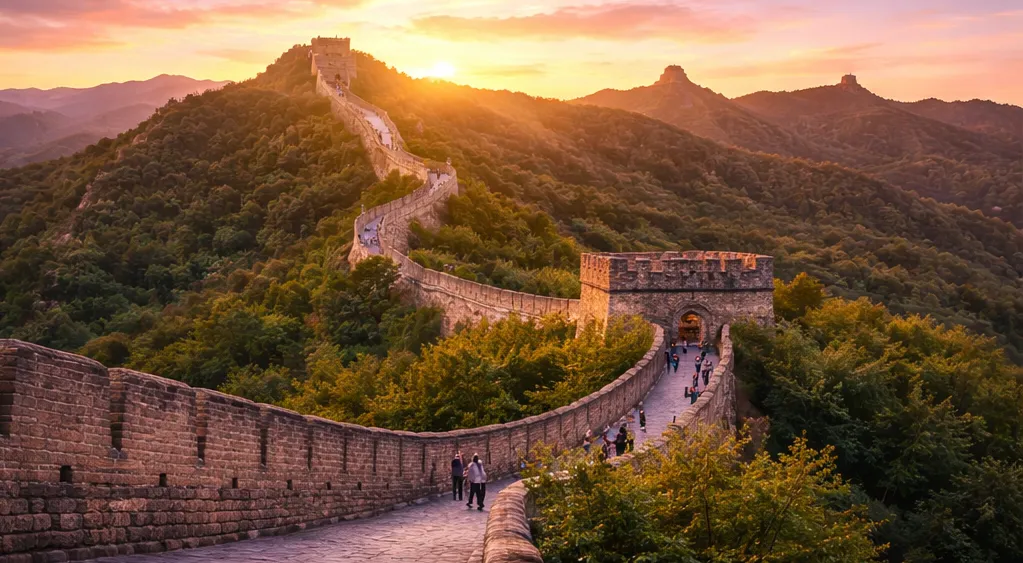
China is overwhelming in the best way possible. It is roughly the size of the United States but with four times the people. You have the Great Wall snake-ing across the north, the Terracotta Warriors in Xi’an, and the futuristic skyline of Shanghai in the east.
But don’t ignore the natural side. The karst mountains of Guilin look like a painting, with limestone pillars rising straight out of the rice paddies. The food varies wildly from region to region. In the north, it is all about noodles and dumplings (wheat grows better there). In the south, it is rice and spicy stir-fries.
South Korea
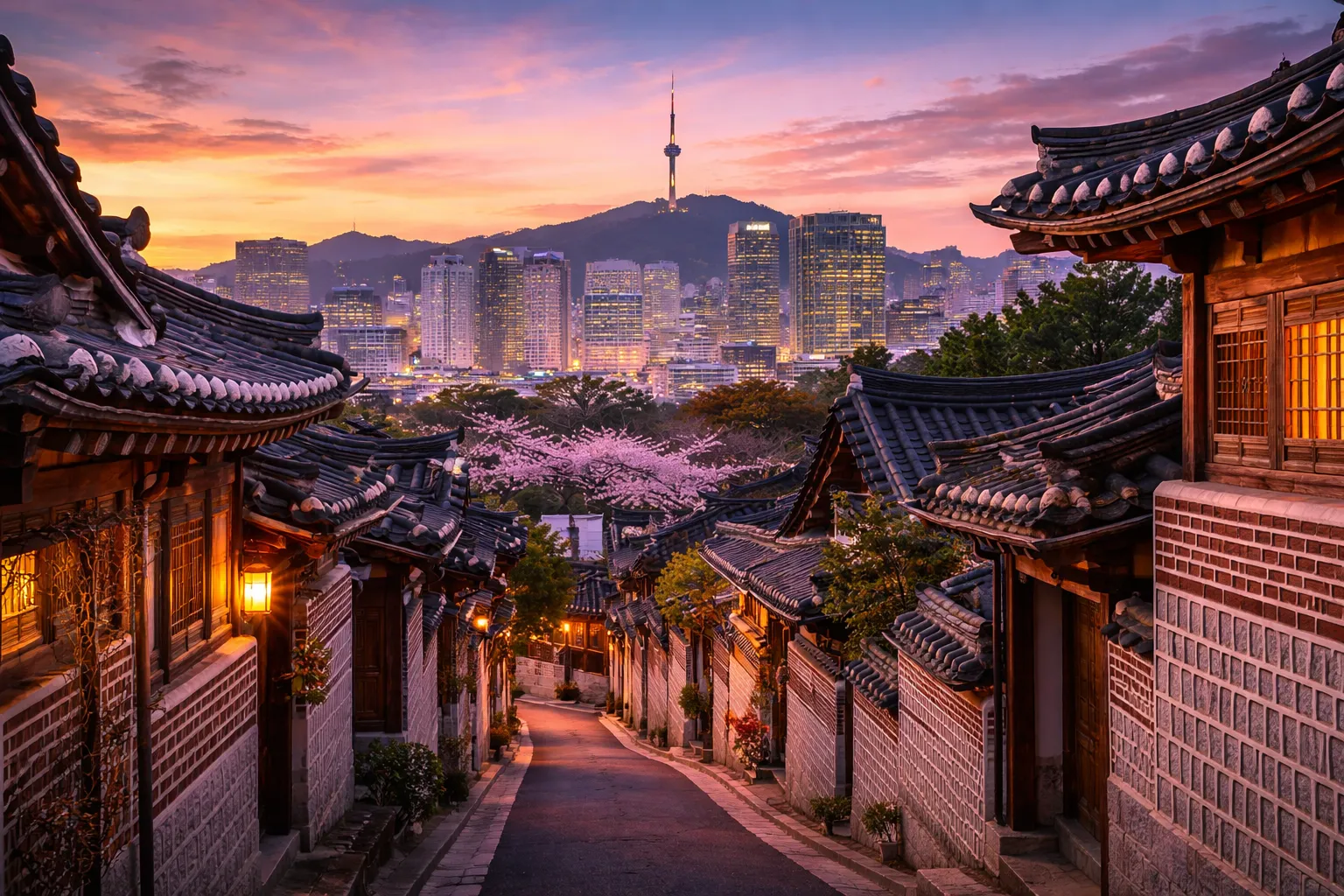
Korea is the cool kid on the block right now. Seoul is a 24-hour city where you can visit a 14th-century palace in the morning and a K-Pop holographic concert in the afternoon. It is rugged terrain, with mountains covering 70% of the country, making it a surprisingly great destination for hikers. The food is bold—garlic, chili, and fermentation (kimchi) are the holy trinity.
Southeast Asia: The Backpacker’s Paradise
If you head south, things get hotter, stickier, and more relaxed. Southeast Asia is the darling of the travel world because it is affordable, beautiful, and incredibly welcoming.
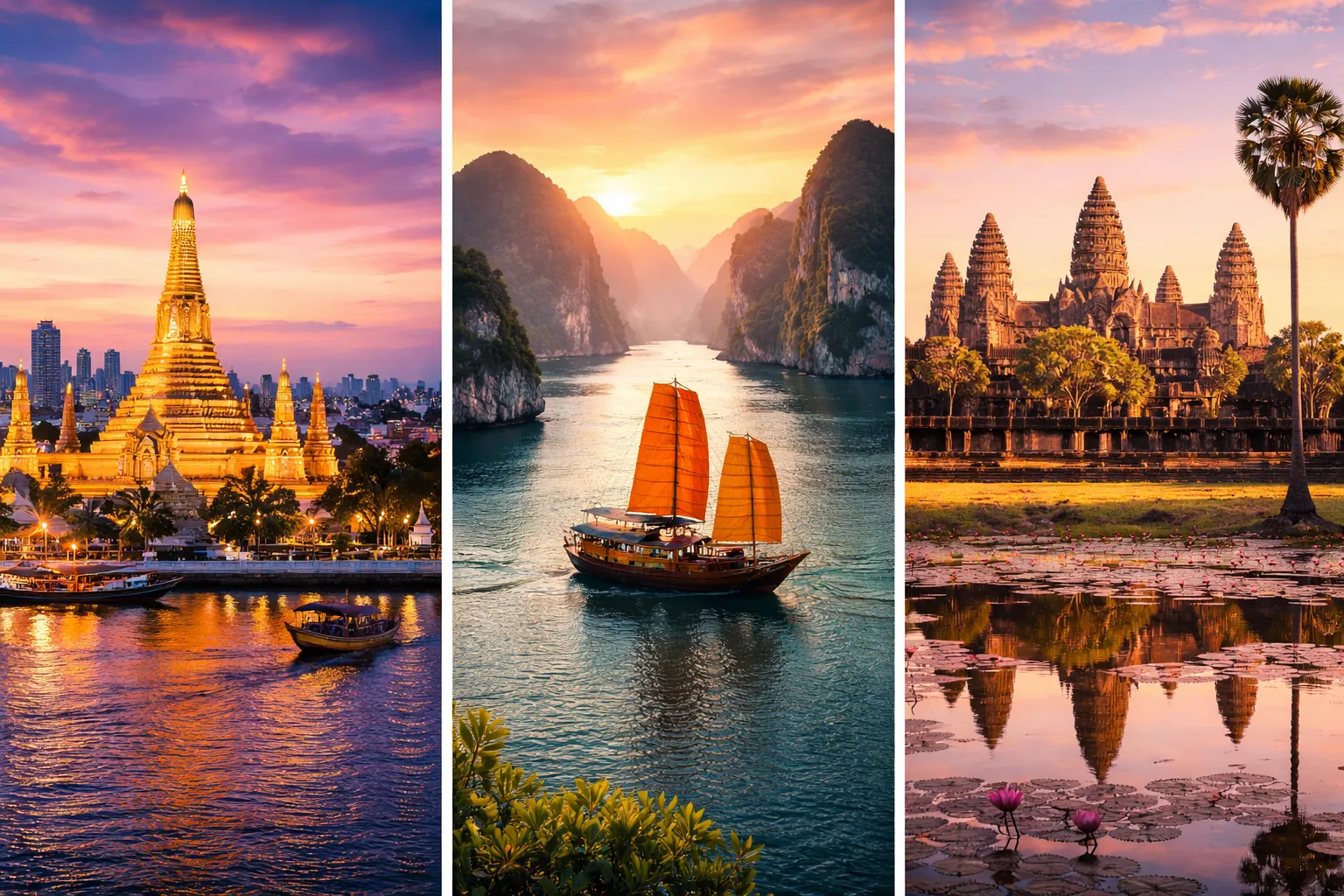
Thailand, Vietnam, and Cambodia
This is the classic route. Thailand is the hub. Bangkok is a sensory overload of street food, temples, and nightlife. But head south, and you hit the islands Phuket, Koh Samui, Koh Tao—where the water is turquoise and the sand is white.
Vietnam is long and skinny, hugging the coast. The north has Halong Bay and the chaotic charm of Hanoi. The center has the history in Hue and Hoi An. The south has the energy of Ho Chi Minh City. The geography changes drastically as you move down; it gets hotter and more tropical.
Cambodia is dominated by one thing: Angkor Wat. It is the largest religious monument in the world, a massive complex of stone temples half-swallowed by the jungle. It is a humbling place that reminds you how temporary human empires really are.
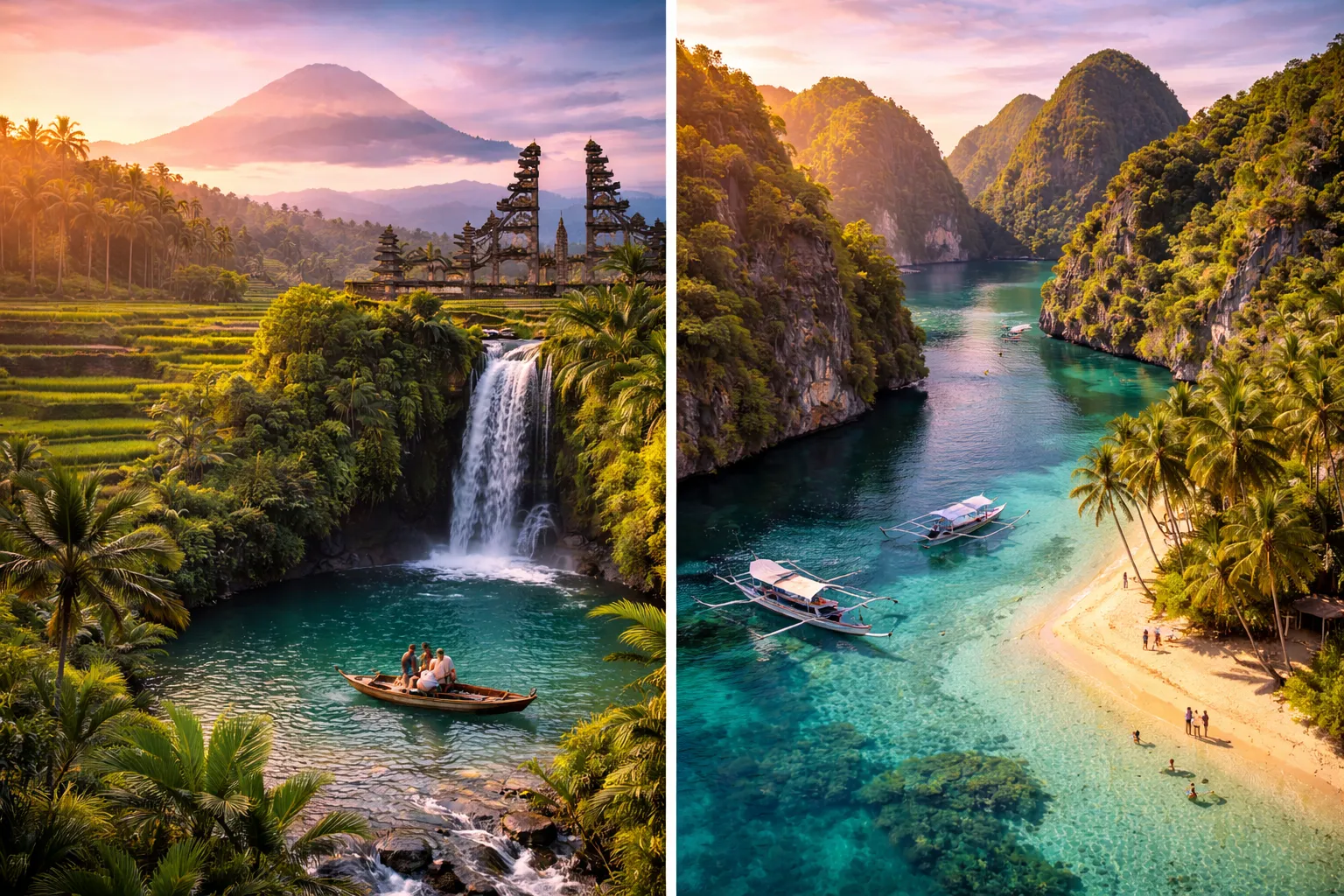
The Archipelagos: Indonesia and the Philippines
Indonesia is a giant. It has over 17,000 islands. Bali is the famous one, known for its Hindu culture, surfing, and yoga retreats. But Java (where the capital Jakarta is) and Sumatra offer wilder adventures, including orangutan trekking and volcano climbing.
The Philippines is all about the water. With 7,000 islands, it has arguably the best beaches and diving in the world. Palawan and Boracay are the heavy hitters, but it is easy to find a deserted island if you are willing to take an extra boat ride.
South Asia: An Assault on the Senses
Crossing the mountains into South Asia—India, Nepal, Sri Lanka is a shift in every way. The colors get brighter, the crowds get denser, and the spirituality becomes palpable.
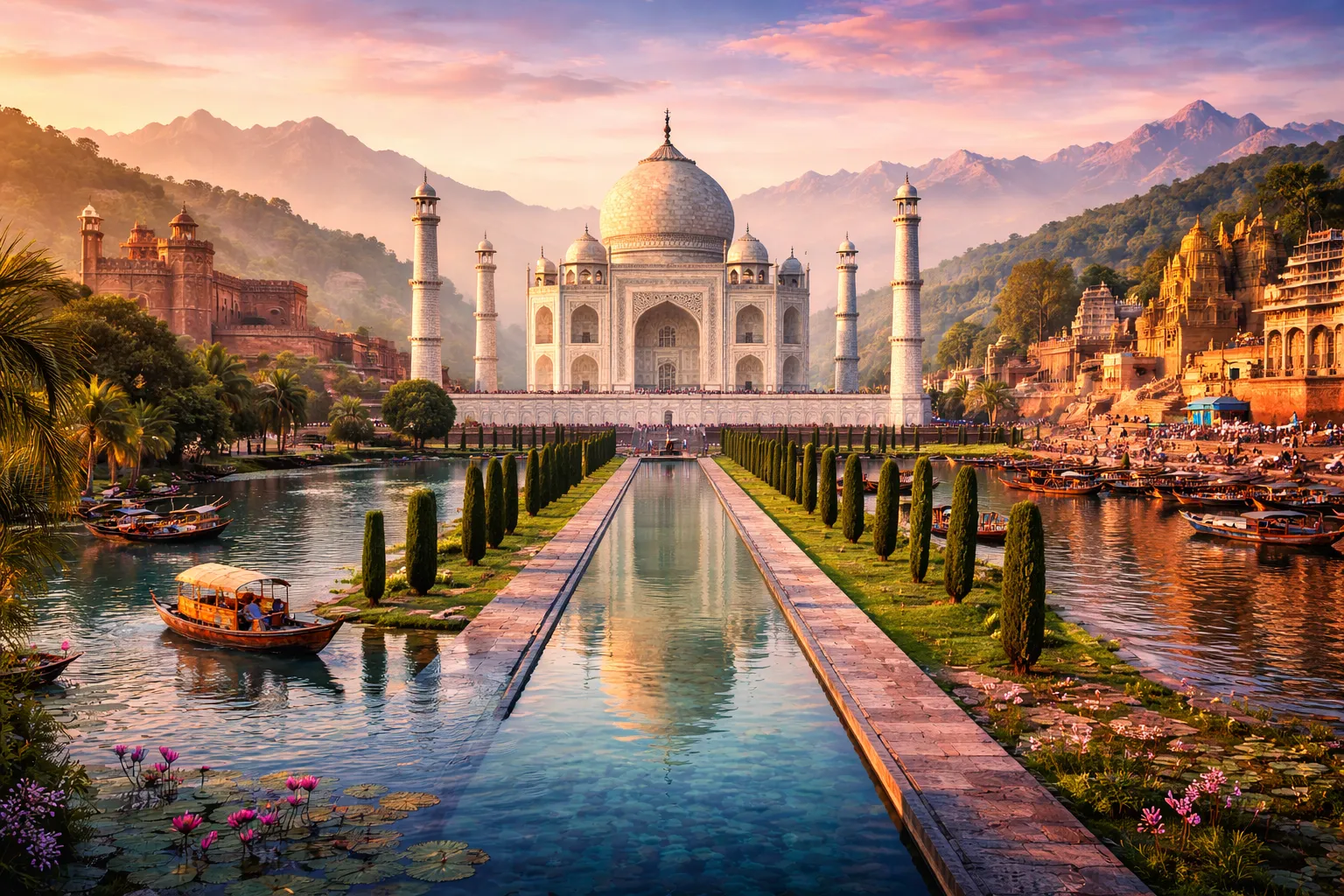
India
There is no preparing for India. You just have to dive in. It is a subcontinent that feels like its own planet. In the north, you have the deserts of Rajasthan with their forts and palaces, and the chaotic history of Delhi. Agra is home to the Taj Mahal, which is somehow even more beautiful in person than in pictures.
Move south, and India becomes tropical. Kerala has chilled-out backwaters where you can rent a houseboat. Goa has beaches and a Portuguese colonial vibe. The food is spicy, complex, and totally different from the "curry" you get back home. Eating with your hands is the norm here, so wash up and dig in.
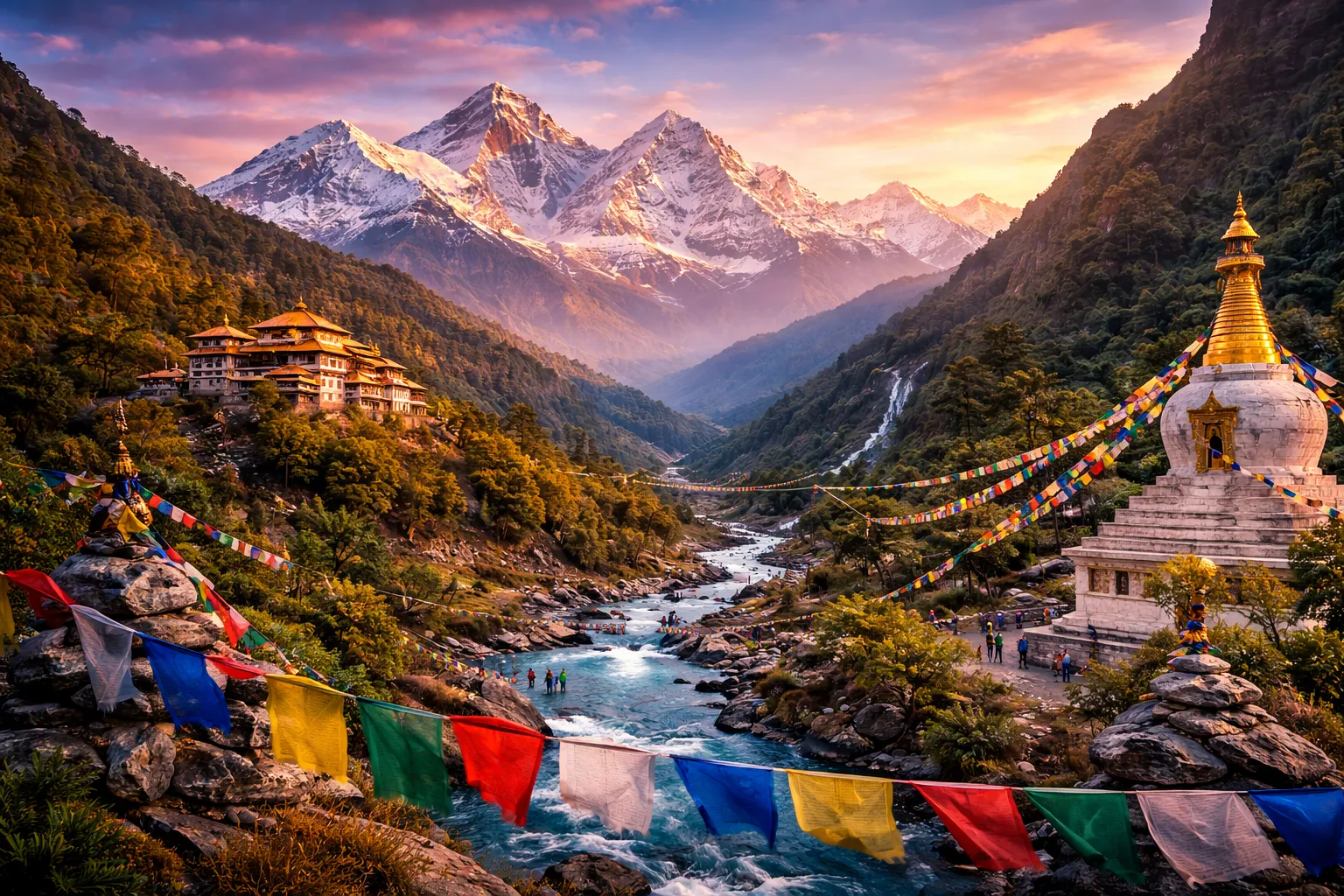
Nepal and the Himalayas
Nepal is the roof of the world. It is the buffer zone between India and China, and it has a culture that blends Hinduism and Buddhism. Kathmandu is a dusty, magical city full of temples and stupas with eyes painted on them. But most people come here to walk. The Annapurna Circuit and Everest Base Camp are the bucket-list hikes, but there are dozens of other trails that are just as stunning.
Sri Lanka
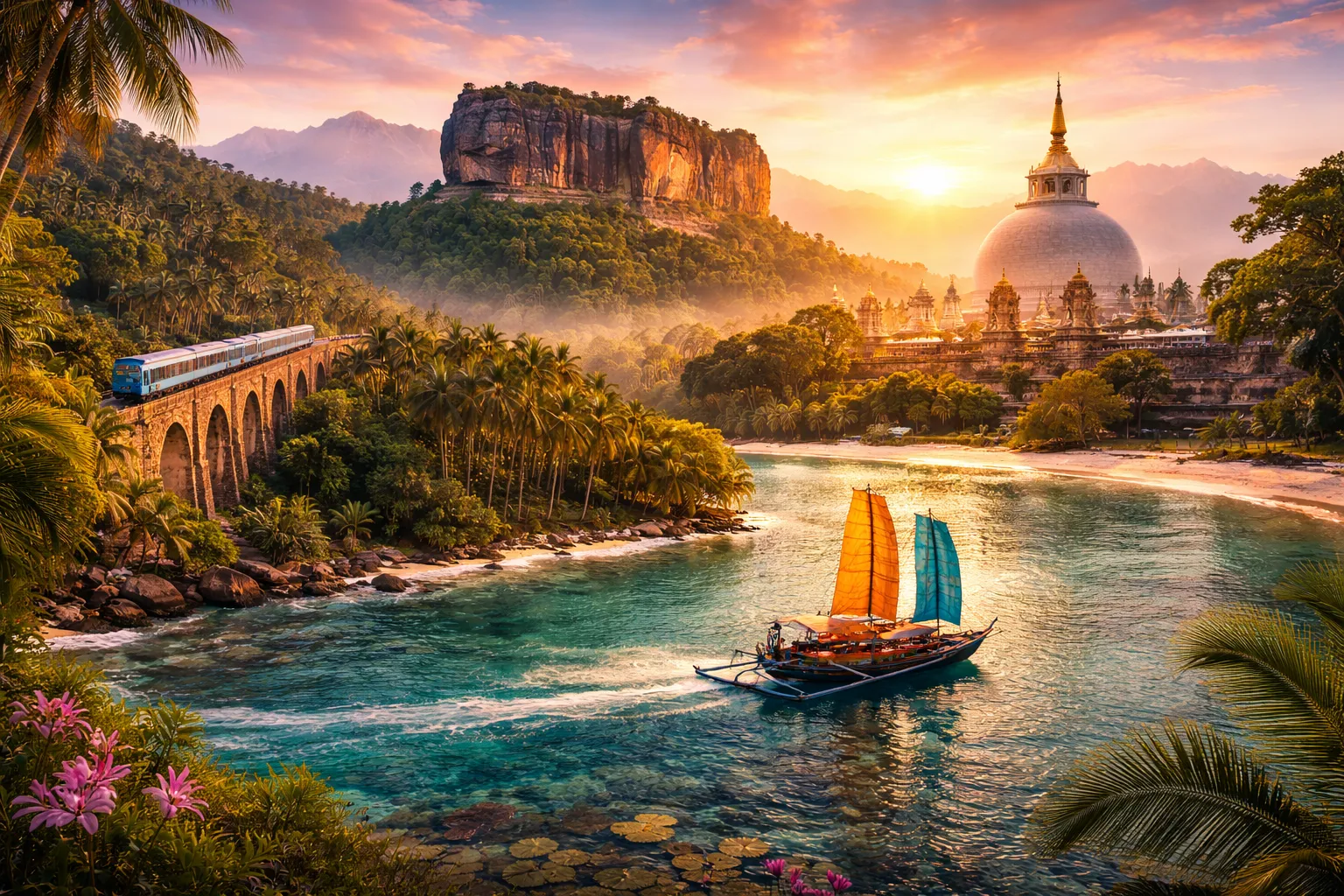
Think of Sri Lanka as "India Lite." It has the chaos and the culture, but it is a bit more manageable, cleaner, and the distances are shorter. You can see wild elephants, visit ancient tea plantations, and surf on the coast all in the same week.
Central Asia: The Road Less Traveled
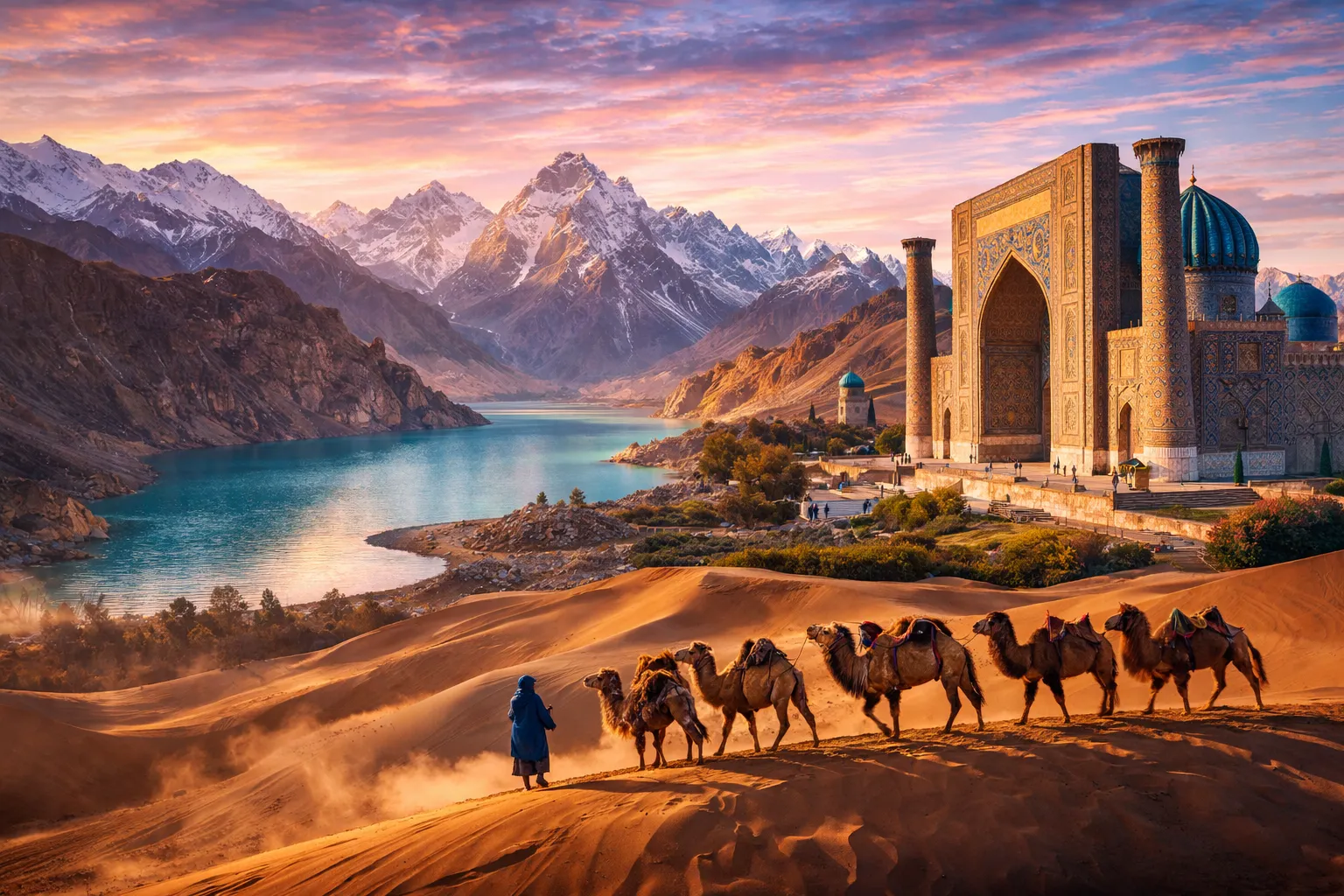
This is the frontier. The "Stans"—Uzbekistan, Kazakhstan, Kyrgyzstan are finally opening up to tourism. This was the heart of the Silk Road. Uzbekistan is the jewel, with cities like Samarkand and Bukhara featuring blue-tiled mosques that date back to the days of Tamerlane.
The landscape here is vast steppe and jagged mountains. It is a place for adventurers who don't mind long car rides and sleeping in yurts. The hospitality is legendary; don’t be surprised if you get invited into a stranger's home for tea and bread.
A Cultural Tapestry Woven Over Millennia
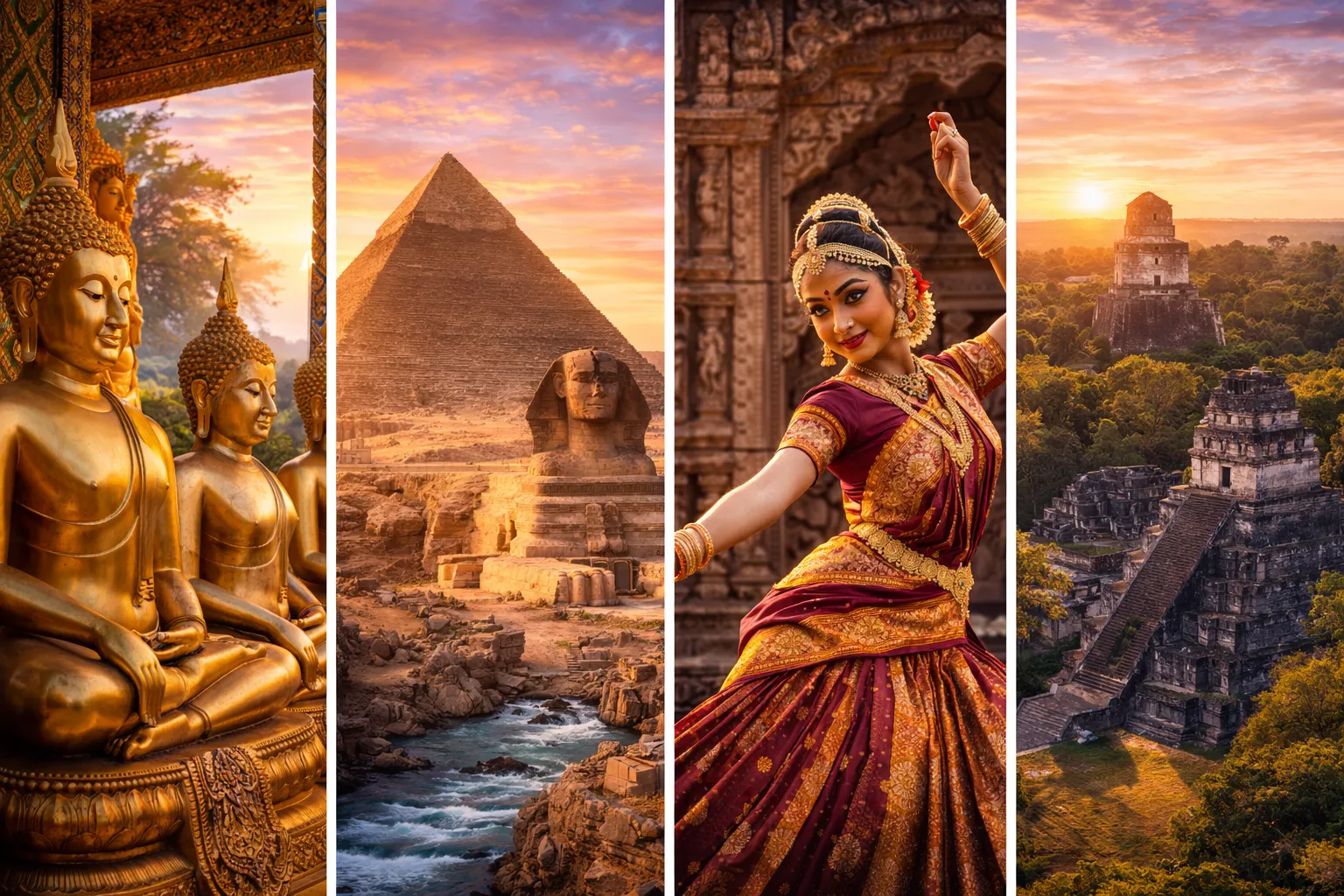
You can't talk about Asia without talking about religion. It is the birthplace of all the world’s major faiths—Hinduism, Buddhism, Islam, Christianity, and Judaism all started on this continent.
In East Asia, Confucianism dictates social structure. It is about hierarchy, family, and order. You see it in how people bow, how they exchange business cards, and how they respect their elders.
In Southeast Asia, Theravada Buddhism makes for a gentler, karma-based outlook. The sight of monks collecting alms in the morning saffron robes is a defining image of the region.
In South Asia, Hinduism creates a colorful, chaotic, and vibrant tapestry of gods, festivals, and rituals. Life here is lived publicly, and faith is part of the daily grind, not something saved for Sundays.
West and Central Asia are predominantly Islamic. The call to prayer echoing from minarets is the soundtrack of the day. It brings a rhythm to life that is beautiful to witness, even if you aren't a believer.
The Food: Why We Really Travel
Let’s be honest. You are going to Asia to eat. And you should. The food culture here is arguably the best in the world because it is fresh, cheap, and lacks pretension.
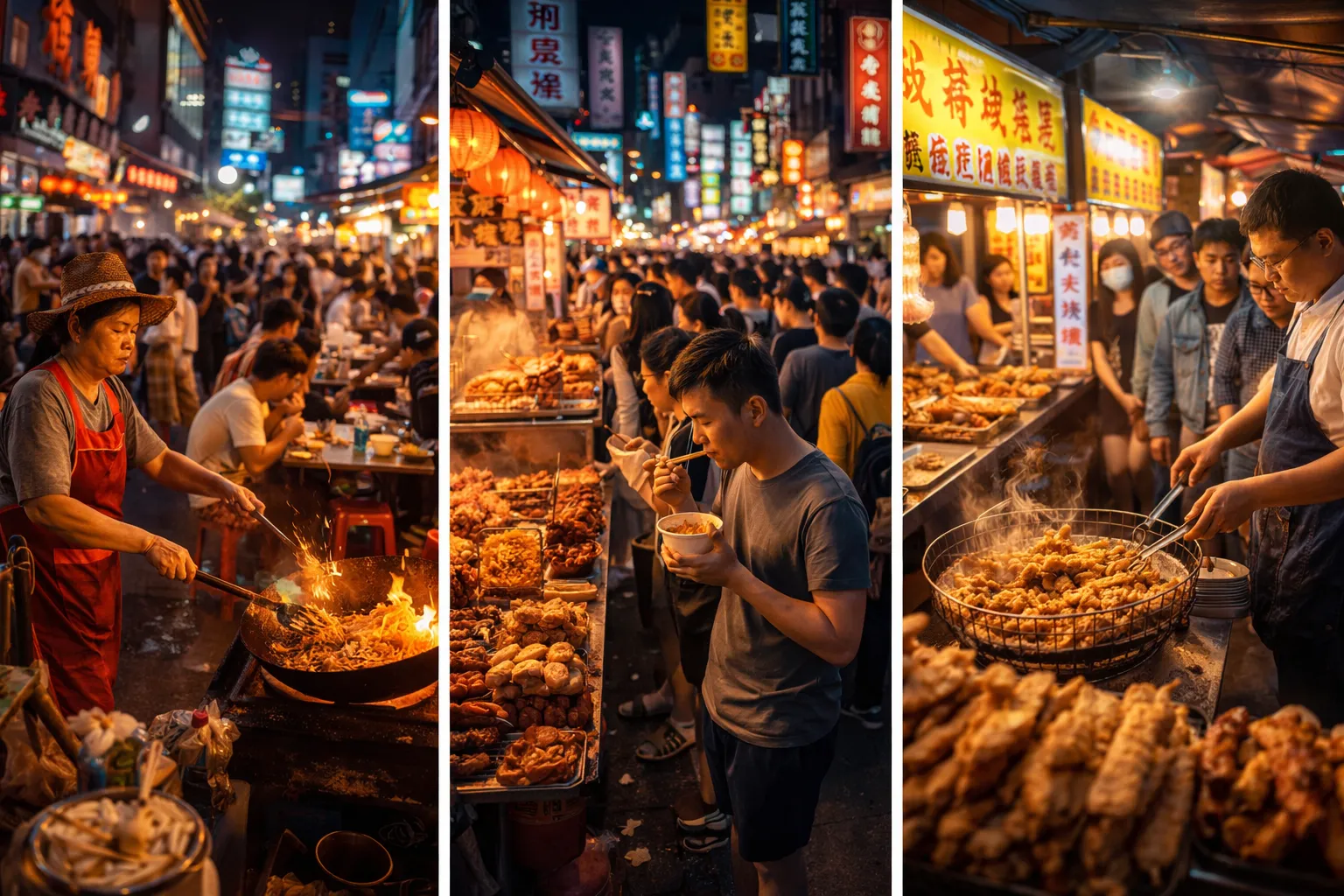
Street Food is King: In the West, we are trained to be scared of street food. In Asia, it is where the best meals are. In Bangkok, a plastic stool on the sidewalk is a Michelin-star experience. In Taiwan, the Night Markets are the center of social life. Look for long lines and high turnover—that’s how you know it’s safe and delicious.
The Flavor Profiles
- East Asia: Soy sauce, ginger, garlic, sesame, miso — subtle, savory, umami.
- Southeast Asia: Lime, fish sauce, chili, lemongrass, coconut milk — sweet, sour, salty, and spicy all at once.
- South Asia: Cumin, turmeric, coriander, cardamom, mustard seeds — deep, earthy, aromatic heat.
Do Not Miss
- Ramen in Japan: It is not instant noodles. It is a rich bone broth simmered for days.
- Dim Sum in Hong Kong: Bamboo baskets of dumplings served with tea.
- Pad Kra Pao in Thailand: Spicy basil stir-fry with a fried egg on top.
- Biryani in India: Fragrant spiced rice with meat, the ultimate comfort food.
When to Go: The Weather Puzzle
Planning a trip to Asia is tricky because the weather is all over the place. The biggest factor is the Monsoon.
South and Southeast Asia: Generally, the dry season is from November to March. This is peak tourist season. The weather is pleasant, the skies are blue. From June to October, it rains. A lot. But don't write off the rainy season completely; the rice paddies turn emerald green, and the crowds disappear.
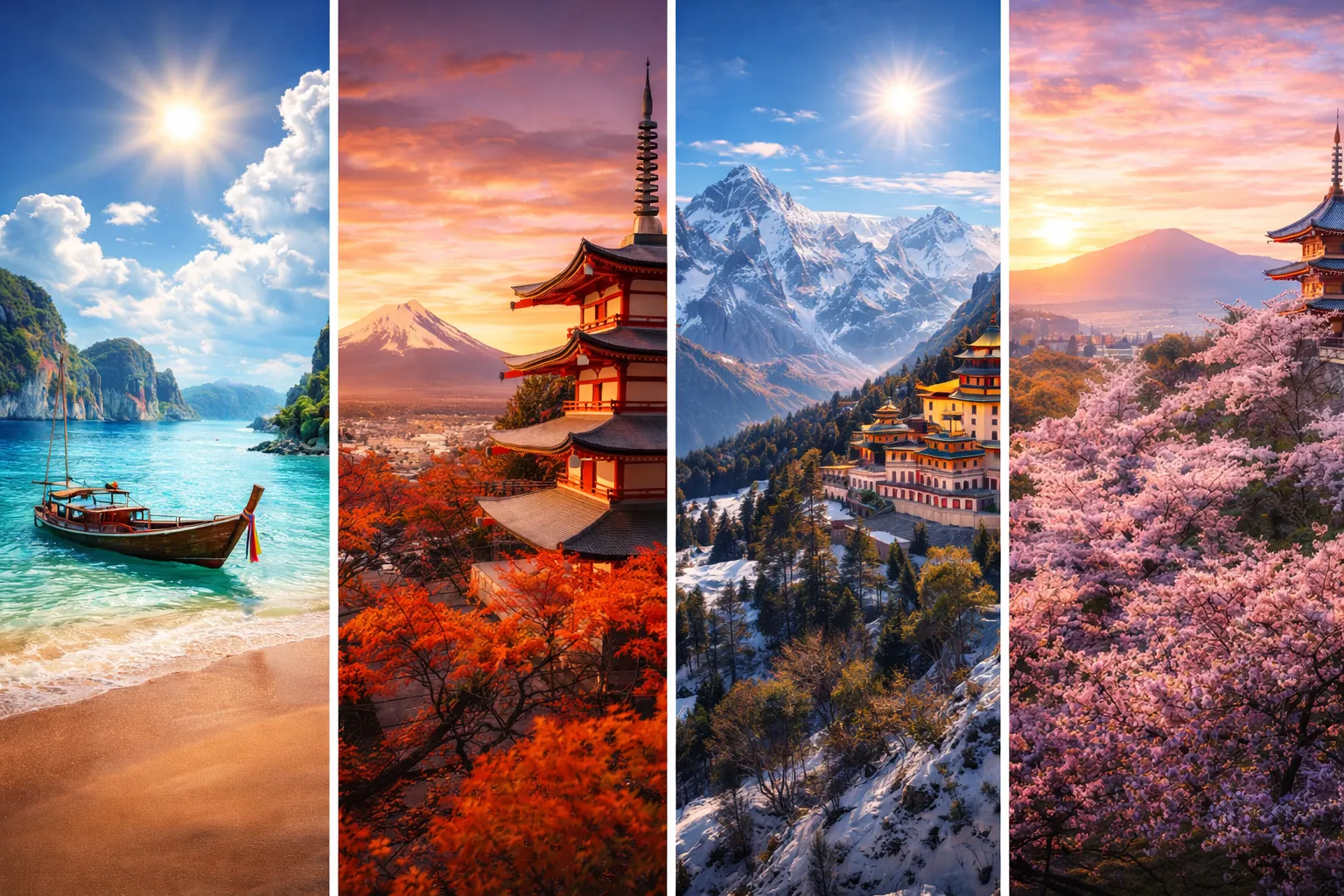
East Asia: They have four seasons, just like Europe or North America. Spring (Cherry Blossoms) and Autumn (Red Leaves) are the best times. Summer can be brutally hot and humid, and winter is freezing, especially in Northern China and Korea.
Central Asia: Go in Spring or Autumn. The summers are scorching hot, and the winters are bone-chillingly cold.
Getting Around: Planes, Trains, and Tuk-Tuks
Transport in Asia runs the gamut from futuristic to prehistoric.
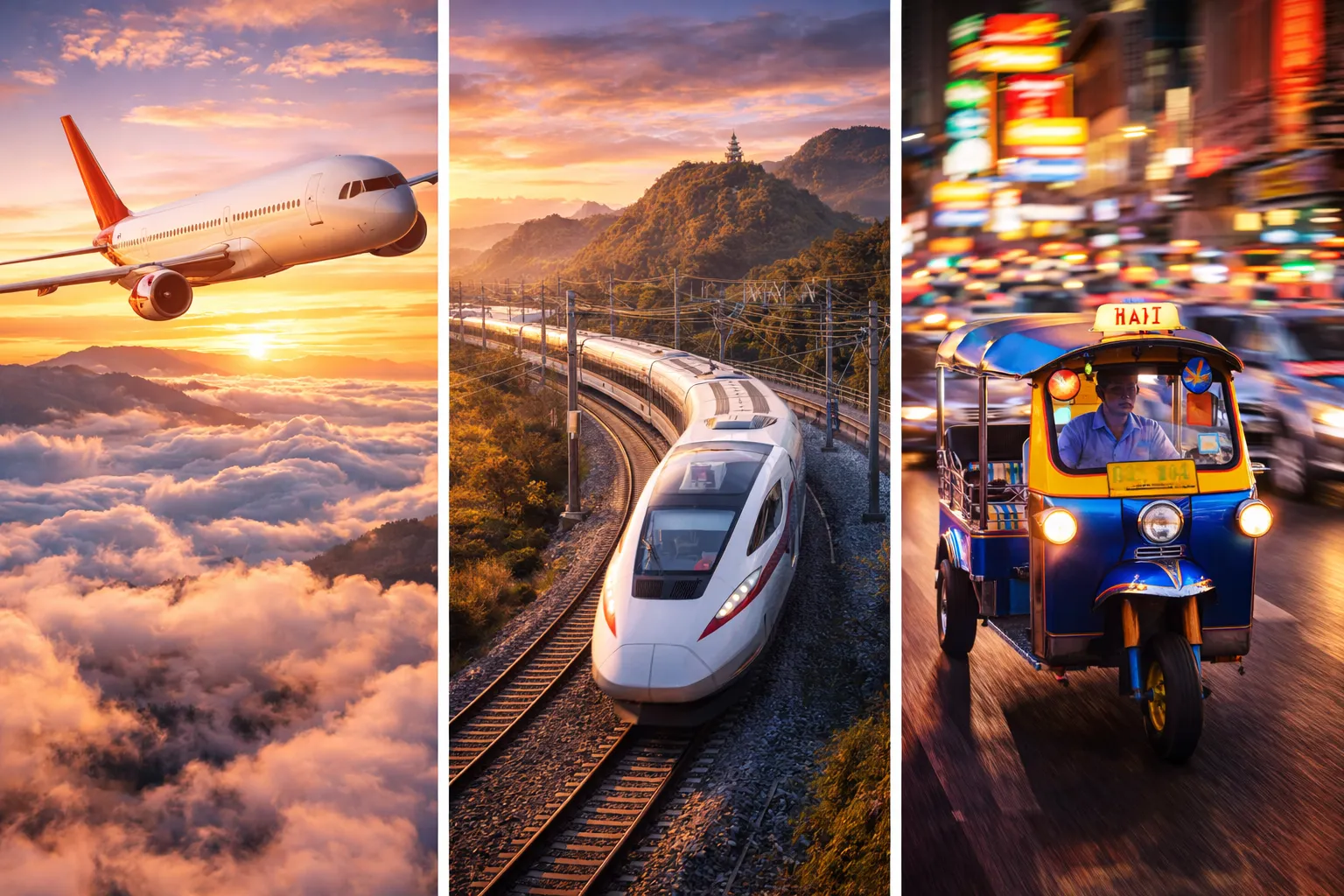
High-Speed Rail: China and Japan have the best trains in the world. They are expensive but worth it for the speed and convenience. You can cross half of China in a few hours.
Budget Airlines: AirAsia, IndiGo, VietJet—these low-cost carriers have revolutionized travel here. You can hop between countries for $50 if you book in advance. Just watch out for baggage fees.
Buses and Night Trains: In Southeast Asia and India, the sleeper train is a rite of passage. It is cheap, you save on a hotel night, and you meet people. The buses range from luxury VIP coaches to terrifying minivans driven by aspiring Formula 1 racers.
Local Transport: Every country has its version of the auto-rickshaw. Tuk-tuks in Thailand, Bajaj in Indonesia, Rickshaws in India. Negotiate the price before you get in. Always.
The Money Talk: Budgeting Your Trip
Asia fits every wallet.
The Budget Backpacker: You can survive in Vietnam, Thailand, or India on $30-$40 a day. That gets you a hostel bed, street food, and local transport. It is one of the few places left where your money truly goes far.
The Mid-Range Traveler: For $100 a day, you are living like royalty in Southeast Asia. Private hotel rooms, nice dinners, domestic flights, and private guides.
The Luxury Seeker: Asia does luxury better than anyone. The hospitality service standards in places like Bangkok, Singapore, and Bali are unmatched. If you have the budget for 5-star hotels, you will get service that makes Western luxury chains look lazy.
Visas and Red Tape
This is the boring part, but it is critical.
Visa-Free:
Singapore, Malaysia, Japan, South Korea, and Taiwan are easy. Most Western passports just show up and get stamped in.
Visa on Arrival / E-Visa:
Thailand, Vietnam, Cambodia, Indonesia, and India mostly use online systems now. apply a few weeks before you go.
The Hard Ones:
China usually requires a trip to an embassy and a detailed itinerary (though they are loosening up for some countries). Bhutan requires you to book through an agency and pay a daily fee.
Always check the requirements for your specific passport six months before you fly. Rules change fast here.

Staying Healthy and Safe
Asia is generally very safe. Violent crime against tourists is rare compared to parts of the Americas or Europe. The biggest dangers are usually traffic accidents and stomach bugs.
- The Stomach: "Delhi Belly" is real. To avoid it, stick to bottled water (check the seal). Eat at busy places. Peel your own fruit. If it’s cooked boiling hot, it’s usually fine.
- Scams: You will run into touts. The "Grand Palace is closed today" scam in Bangkok is a classic. The "Tea House" scam in Shanghai is another. If a stranger is too friendly and wants to take you somewhere, keep your guard up.
- Respect: Dress modestly at temples. Cover your shoulders and knees. Don't touch people on the head (it’s considered sacred in Buddhist cultures). And keep your cool—losing your temper or shouting is considered a "loss of face" and will get you nowhere.
Wrapping It Up
There is no preparing for India. You just have to dive in. It is a subcontinent that feels like its own planet. In the north, you have the deserts of Rajasthan with their forts and palaces, and the chaotic history of Delhi. Agra is home to the Taj Mahal, which is somehow even more beautiful in person than in pictures.
Move south, and India becomes tropical. Kerala has chilled-out backwaters where you can rent a houseboat. Goa has beaches and a Portuguese colonial vibe. The food is spicy, complex, and totally different from the "curry" you get back home. Eating with your hands is the norm here, so wash up and dig in.